Can Culture Stand Under the Shadow of Eternal Issues?
HOW IS IT right, or even psychologically possible, for creatures who are every moment advancing either to Heaven or to hell to spend any fraction of the little time allowed them in this world on such comparative trivialities as literature or art, mathematics or biology. If human culture can stand up to that, it can stand up to anything. To admit that we can retain our interest in learning under the shadow of these eternal issues but not under the shadow of a European war would be to admit that our ears are closed to the voice of reason and very wide open to the voice of our nerves and our mass emotions.
This indeed is the case with most of us, certainly with me. For this reason I think it important to try to see the present calamity in a true perspective. The war creates no absolutely new situation; it simply aggravates the permanent human situation so that we can no longer ignore it. Human life has always been lived on the edge of a precipice. Human culture has always had to exist under the shadow of something infinitely more important than itself. If men had postponed the search for knowledge and beauty until they were secure, the search would never have begun. We are mistaken when we compare war with “normal life.” Life has never been normal. Even those periods which we think most tranquil, like the nineteenth century, turn out, on closer inspection, to be full of crises, alarms, difficulties, emergencies. Plausible reasons have never been lacking for putting off all merely cultural activities until some imminent danger has been averted or some crying injustice put right. But humanity long ago chose to neglect those plausible reasons. They wanted knowledge and beauty now, and would not wait for the suitable moment that never comes. Periclean Athens leaves us not only the Parthenon but, significantly, the Funeral Oration. The insects have chosen a different line: they have sought first the material welfare and security of the hive, and presumably they have their reward. Men are different. They propound mathematical theorems in beleaguered cities, conduct metaphysical arguments in condemned cells, make jokes on scaffolds, discuss the last new poem while advancing to the walls of Quebec, and comb their hair at Thermopylae. That is not panache ; it is our nature.
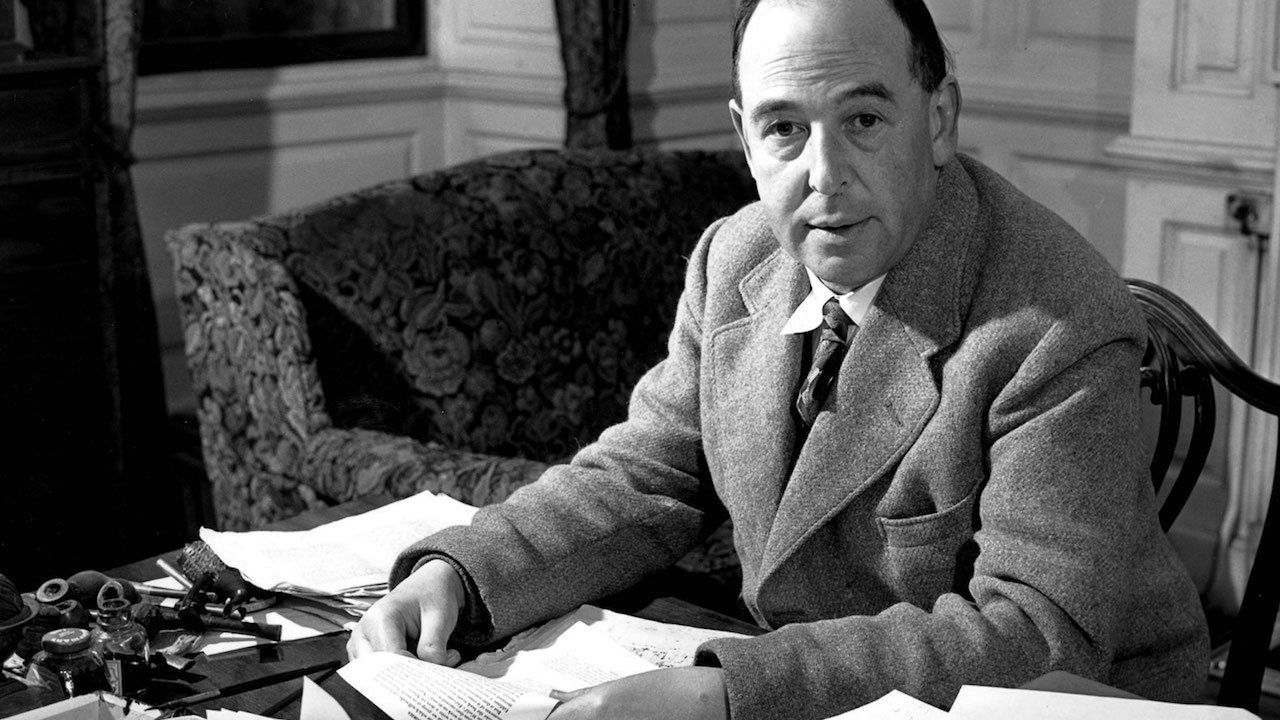
~C. S. Lewis, “Learning in War-Time”
Anno Domini 2019, October 5
Feast of St. Charitina the Martyr
Share this Post on Your Preferred Platform