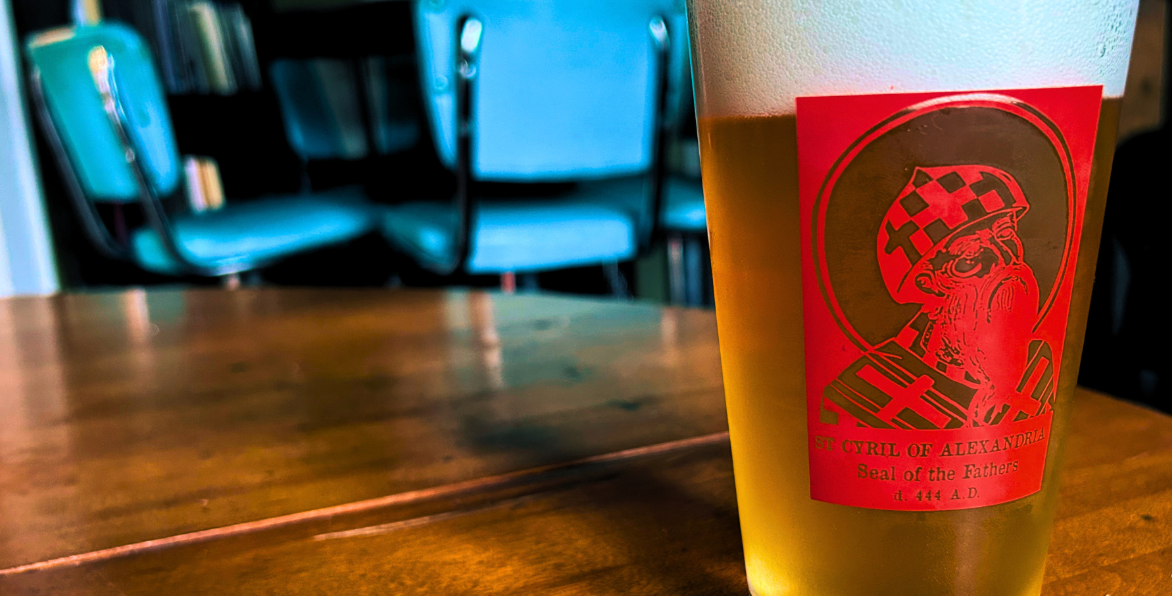
A Plea for Prohibition
by G. K. Chesterton
Feast of St Paul the Confessor, Patriarch of Constantinople
Anno Domini 2021, November 6
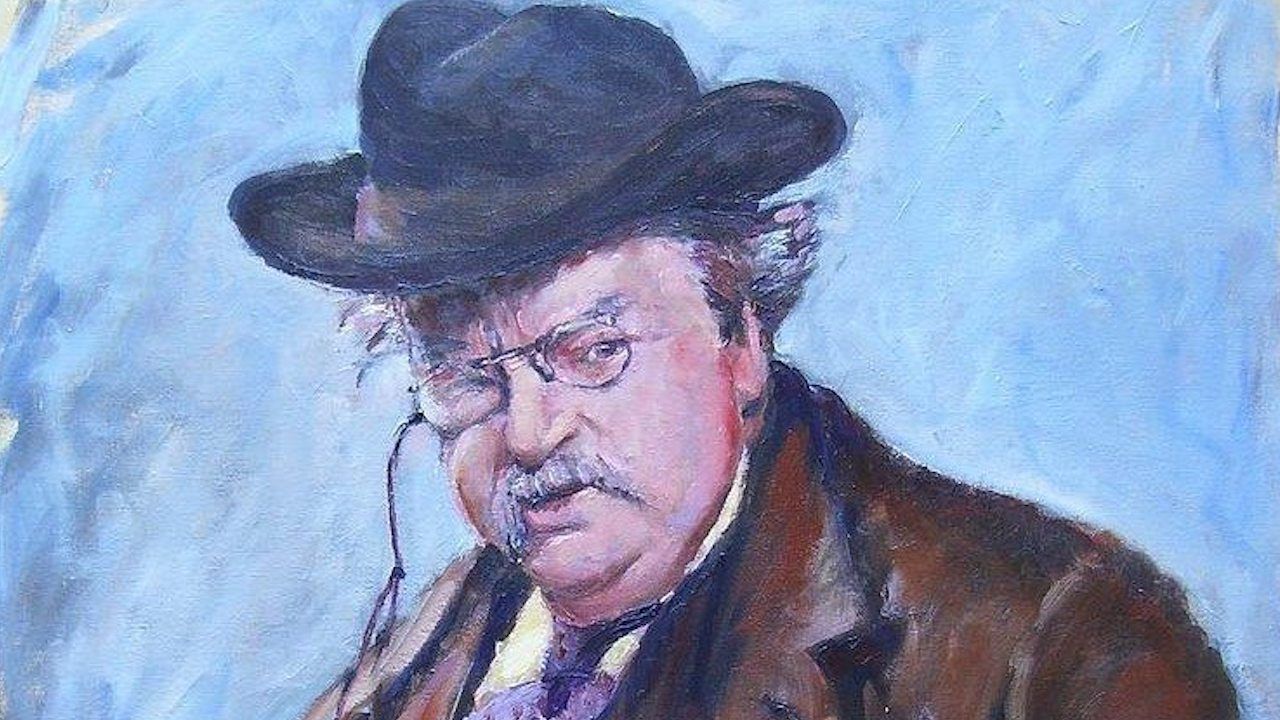
AFTER a careful study of the operations of Prohibition in America, I have come to the conclusion that one of the best things that the Government could do would be to prohibit everything.
That the story of Mephistopheles, the fiend who tempted Faust, is in reality an allegory of the story of Prohibition in America, is admitted by all serious scholars whose authority carries weight in the modern world. Critics admiring the sarcasm of Mephistopheles have repeatedly referred to his humour as ‘dry’ — a term now impossible to separate from its political content. The promise of the devil to produce a new and youthful Faust, in place of the old one, is obviously an allusion to the promise of the Prohibitionists to produce a new and fresh generation of American youth, unspoiled by the taste of alcohol. The allegory is not only clear about the sort of things that Prohibition promised, but is especially clear about the sort of things that Prohibition really performed. One of the things, for instance, which Mephistopheles really performed (if I remember rightly) was to make holes in a tavern table and draw out of the dead timber some magic hell-brew of his own, saying something like,
Wine is sap and grapes are wood;
This wooden board yields wine as good.
Could there possibly be a more self-evident and convincing reference to the abuse arising from wood alcohol? Any critic who would evade so crushing a conclusion, as if it were a coincidence, must be indeed lacking in the logic that has lent stability and consistency to the Higher Criticism. When the fiend describes himself as “the spirit who denies,” it is plain enough that we are to read it in the sense of one who denies people the use of spirits. But the conclusive argument to my mind, in the light of all the circumstances both in literature and life, is the fact that Mephistopheles distinctly says of himself: “I am he who always wills the bad and always works the good.”
That Prohibition and Prohibitionists willed the bad no righteous or Christian person will doubt for a moment. That Prohibition and Prohibitionists eventually work the good may appear for the moment more doubtful. And yet there is one sense in which Prohibition has already worked some good; and may yet work very much more good. Wood alcohol is not in itself a happy example; and no judicious wine-taster will expect to find the best vintages in a liquid drawn by a devil out of a dinner-table. But there really is already in America a large number of people who are producing drinks in an equally domestic fashion; and drinks for their own dinner-tables if not out of them. It is not by any means true that all this home-made drink is poison. The presence of the devil is plain enough in the pleasing scheme of the American Government to poison all the alcohol under its control, so that anybody drinking it may be duly murdered; but murder has become almost the ordinary official method of the enforcement of a teetotal taste in beverages.
But the private brews differ very widely; multitudes are quite harmless and some are quite excellent. I know an American university where practically every one of the professors brews his own beer; some of them experimenting in two or three different kinds. But what is especially delightful is this: that with this widespread revival of the old human habit of home-brewing, much of that old human atmosphere that went with it has really reappeared. The professor of the higher metaphysics will be proud of his strong ale; the professor of the lower mathematics (otherwise known as high finance) will allege something more subtle in his milder ale; the professor of moral theology (whose ale I am sure is the strongest of all) will offer to drink all the other dons under the table without any ill effect on the health. Prohibition has to that extent actually worked the good, in spite of so malignantly and murderously willing the evil. And the good is this: the restoration of legitimate praise and pride for the creative crafts of the home.
This being the case, it seems that some of our more ardent supporters might well favour a strong, simple and sweeping policy. Let Congress or Parliament pass a law not only prohibiting fermented liquor, but practically prohibiting everything else. Let the Government forbid bread, beef, boots, hats and coats; let there be a law against anybody indulging in chalk, cheese, leather, linen, tools, toys, tales, pictures or newspapers. Then, it would seem by serious sociological analogy, all human families will begin vigorously to produce all these things for themselves; and the youth of the world will really return.
*Originally published in Sidelights on New London and New Yorker and Other Essays (London: Sheed & Ward, 1932).
Share this Post on Your Preferred Platform