The Christian & The Media: Malcolm Muggeridge's Lectures at the 1976 London Lectures in Contemporary Christianity
by Michael Simmon
Commemoration of St Gregory the Theologian
Anno Domini 2026, January 25
This Life’s dim windows of the soul,
Distort the heavens from pole to pole,
And lead you to believe a lie
When you see with, and not through, the eye.
- William Blake
In his bookThe Demon-Haunted World — published in 1996 — American astrophysicist Carl Sagan lamented what he called the “dumbing down of America.” This degenerative process, he claimed, was the direct result of the ever-increasing influence of mass media (with its lack of substantive content), 30-second sound bites, and lowest-common-denominator programming combined with, in his view, “a kind of celebration of ignorance.”
Today, mass media and the devices on which we consume information not only influence the world around us, they dominate our every waking moment. The 24-hour news cycle, the constant intrusions of advertisements, the droning of “social media” — not to mention the memeification ofeverything — bombard us with an unrelenting stream of words and images. And, nearly all of it perpetuates a culture of consumption.
However, we no longer simply consume media (and the products, services, and ideas it entices us to consume) passively. Nearly every media platform actively encourages its users to create their own content. According to recent statistics, more than 500,000 hours of video are uploaded to YouTube, 500,000,000 X posts are created, andbillions of items are shared on Facebook every single day. [1, 2, 3]
We no longer live in an information economy; we now live in an attention economy, and when attention is currency, the truth is of little value. Social media companies claim they are helping create a better world while they suppress the fact their platforms cause anxiety and depression. Podcasters and “new media” personalities who peddle conspiracy theories and pseudo-science are considered credible while the credibility of those who were previously called “experts” erodes.
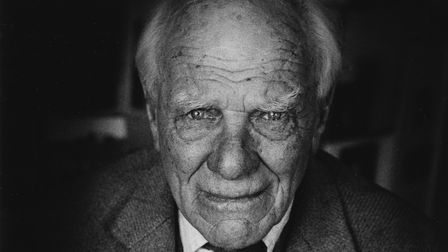
Malcolm Muggeridge once quipped, “Not onlycan the camera lie, it always lies.” Muggeridge was not exaggerating. He had experienced this reality first-hand.
As the Moscow correspondent for theManchester Guardian in the early 1930s, Muggeridge witnessed numerous Western journalists publish false reports on the conditions within the USSR in service to a progressivist / socialist / collectivist ideology. Muggeridge, along with a few brave others, reported the truth of Soviet oppression and manipulation, at great professional and personal risk. Later in his career, as a commentator and documentarian for the BBC in the 1960s and 1970s, he learned how lighting, angles, props, and cutting room techniques could be used to distort reality, reshaping and reimagining a sequence of events such that, in the end, the final product held little connection to the actual event as it transpired.
In 1976, in a series of lectures Muggeridge gave on the relationship between the media and contemporary Christianity[4], he expounded on the fantasy world in which the media induces us to live. According to Muggeridge, the fantasy of the media is a juxtaposition to the reality of humans being image-bearers of God.
Like the prophets of old who were persecuted for their pronouncements of judgment, Muggeridge’s contemporaries accused him of being anti-media and for biting the hand that fed him. He was frequently maligned, even hated, in the media class for the truths he dared proclaim. It would be tempting to sympathize with Muggeridge’s detractors; after all, Muggeridge was part of the media, so he could be considered a part of the problem — if indeed there was a problem. Muggeridge, though, appreciated this critique, and thus he never advocated a scorched-earth approach to engaging with, or even participating in, the media.
Instead, he advocated a more nuanced approach, one that recognizes that the camera, by nature, bends toward deception and illusion and views everything with a healthy dose of skepticism, bordering on cynicism (one can only imagine what Muggeridge would say about the current acceleration of artificial intelligence which makes discerning what is real from what is not more difficult by the hour). He said we must face the fact that the majority of what we read and hear and see is designed to manipulate us and divide our minds and hearts.
“The fantasy is all-encompassing,” he said. “Awareness of reality requires the seeing eye which comes to those born again of Christ.”
When Christ taught His disciples that the eye is the lamp of the body, He was not talking about the fleshy objects in our skulls. Christ was talking about spiritual eyes. When we “look” at the world around us and “filter” it through the “lens” of the Spirit, the Spirit sheds light so we can “see” clearly.
To determine truth from fiction and reality from fantasy, we must take every thought captive and submit it to the authority of Christ. Without Christ to guide us, we can be tempted to turn to the left or to the right. Without Christ to anchor us, we can be tossed to and fro by every change of doctrine. Without Christ to enlighten us, we can be blinded by our passions and desires.
One of Muggeridge’s favorite refrains was the quote from Blake at the top of this post. When we seethrough
the eye, we will be able to see the truth amidst lies and recognize the fantasy masquerading as reality. Thus, we will walk in the light and not in the darkness.
Both Sagan and Muggeridge came to the same conclusion about the influence of the media, but they proposed radically different solutions. For Sagan (and others committed to a scientific-materialist worldview), the restoration of a world plunged into darkness by a media- and technology-induced stupefaction can only be found in a deified natural world; indeed, the subtitle to Sagan’sThe Demon-Haunted World is “Science as a Candle in the Dark.” For Muggeridge (and for those who claim to follow Christ), true and lasting restoration can only be found in the Incarnate Christ. He is the Light which shines in the darkness, the true Light which gives light to every man who comes into the world.
[1] https://seo.ai/blog/how-many-videos-are-on-youtube
[2] https://www.dsayce.com/digital-marketing/tweets-day/
[3] https://blog.wishpond.com/post/115675435109/40-up-to-date-facebook-facts-and-stats
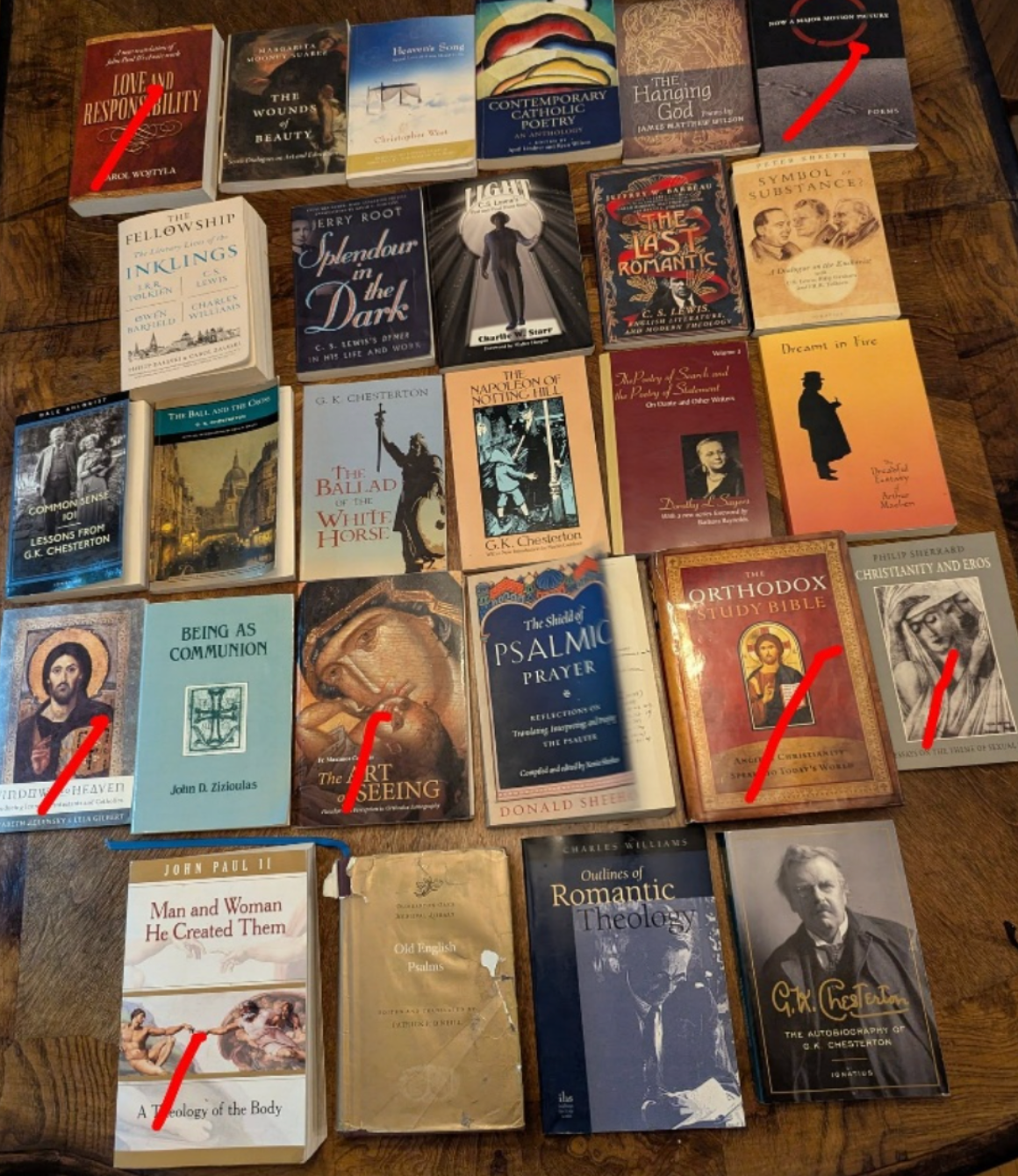
[4] https://www.eighthdaybooks.com/product/156872/Christ-and-the-Media
About the Author
Michael Simmon is a 20-year veteran of the marketing and advertising profession specializing in content and campaign development in the manufacturing industry. A self-described "Orthodox-adjacent Patristic Protestant" committed to
Eighth Day Ecumenism, Michael is a coordinator of and regular contributor at the Hall of Men and currently serves as Secretary of the EDI Board of Directors. He resides in Wichita, Kan., with his wife and their four children, along with one dog, two cats, three ducks, and five chickens.
Share this Post on Your Preferred Platform