Imagination as a Way of Knowing
Introduction: Florilegium
DR. ANTHONY Gythiel, the late Professor of Medieval History at Wichita State University, was one of the best teachers I ever studied under. In all of his courses, he required his students to select three books related to the course subject. The student’s task was to select three passages that stood out; the passages could be as short as one sentence or as long as a full paragraph. Then the student had to explain why the passage was important, how it fit with the rest of the book, and whether or not the student agreed or disagreed. Dr. Gythiel called this assignment a “ florilegium .”
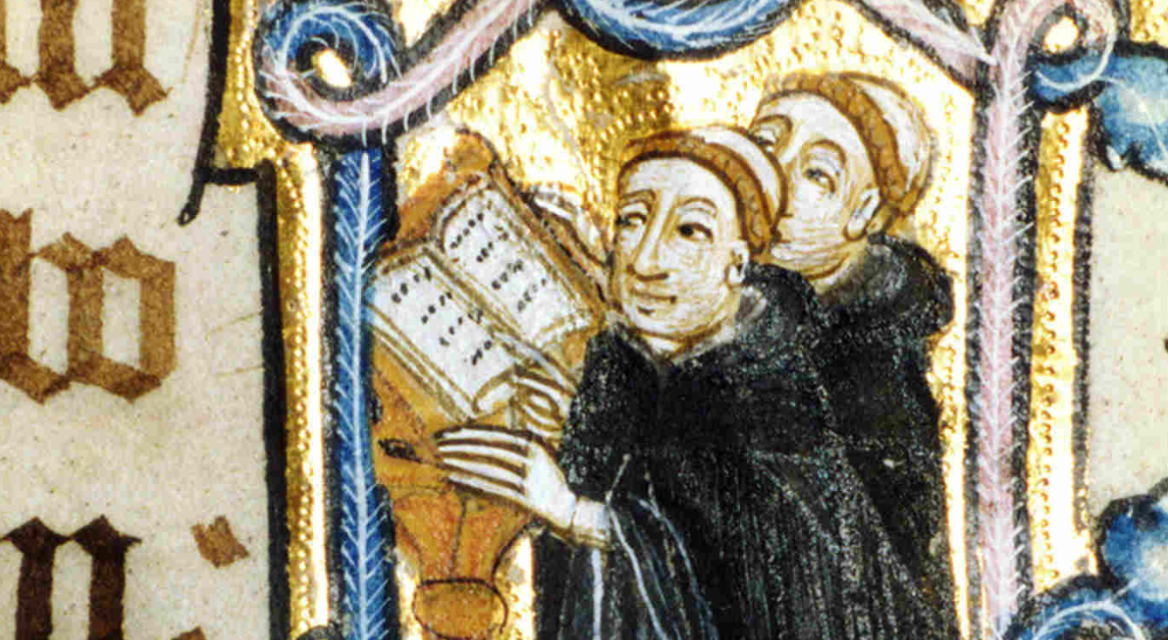
The Latin word florilegium literally means a gathering of flowers. Adapted from a Greek word of the same meaning ( anthologia ), the florilegium developed into a common medieval genre: a gathering of literary flowers from other writings or from a larger work. I took many classes from Dr. Gythiel, so I had a lot of practice creating florilegia . So, in preparation for today, I created a florilegium . And now I want to try a little experiment. I want to use the florilegium as a guiding structure for our lecture this afternoon.
The florilegium
is a collection of literary flowers I
have selected from various writings. All I intend to do today is read the
literary flower – the quote (let’s just call it a flower) – and then make a few
comments. So we’ll be weaving back and forth between flowers and commentary.
Imagination as a Way of Knowing
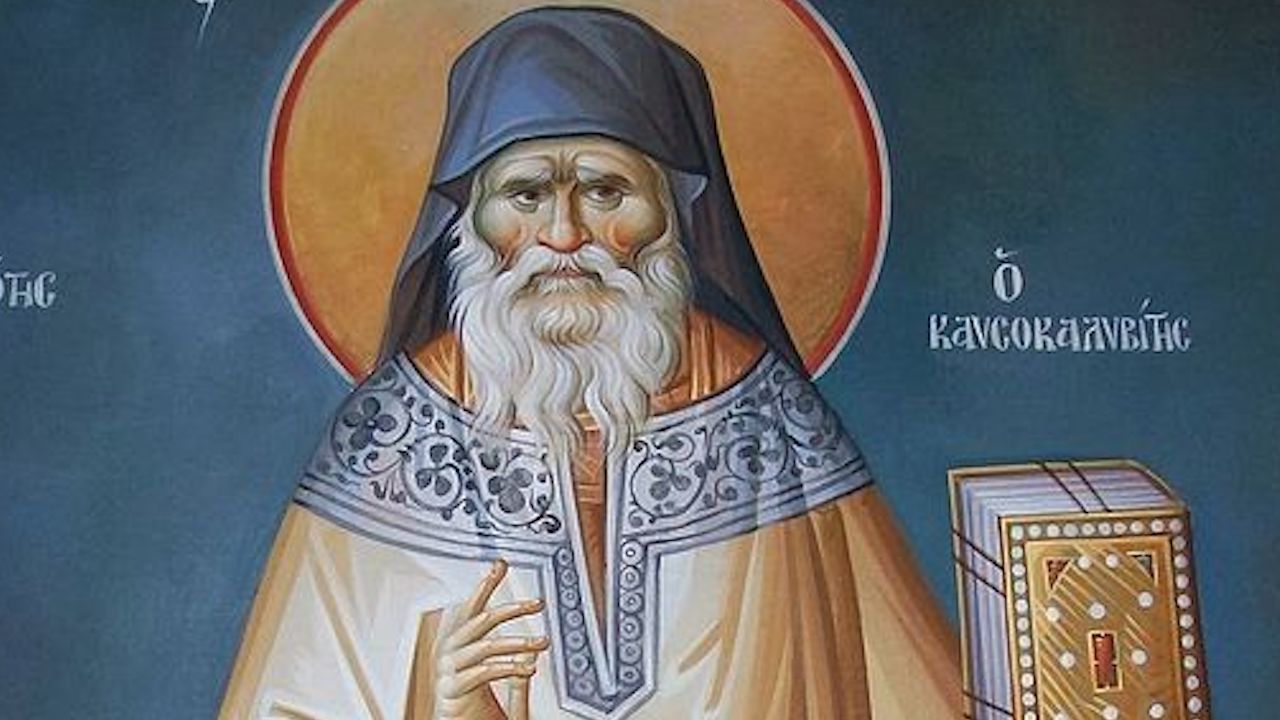
I want to begin with four flowers from four of my personal heroes: St. Porphyrios, G. K. Chesterton, Wendell Berry, and C. S. Lewis. The first one is from St. Porphyrios, a twentieth-century Athonite monk. And it is a provocative one:
Whoever wants to become a Christian must first become a poet.
Notice what St. Porphyrios doesn’t say. He doesn’t say you need to be born again. He doesn’t tell you to repent and be baptized. And he doesn’t say you have to take up your cross daily and follow Christ. Instead, he says you need to become a poet. This sounds scandalous, if not outright blasphemous. But the Orthodox Church has deemed Porphyrios worthy of being called a saint. What, then, is St. Porphyrios really suggesting?
I think G. K. Chesterton can help us make sense of St. Porphyrios, or at least of what I think St. Porphyrios is saying. So let’s turn to the second flower by Chesterton from his book Orthodoxy :
Now, if we are to glance at the philosophy of sanity, the first thing to do in the matter is to blot out one big and common mistake. There is a notion adrift everywhere that imagination, especially mystical imagination, is dangerous to man’s mental balance; poets are commonly spoken of as psychologically unreliable; . . . Imagination does not breed insanity. Exactly what does breed insanity is reason. Poets do not go mad; but chess players do. Mathematicians go mad, and cashiers; but creative artists very seldom. I am not, as will be seen, in any sense attacking logic: I only say that this danger lies in logic, not in imagination. . . . The poet only asks to get his head into the heavens. It is the logician who seeks to get the heavens into his head. And it is his head that splits. The mad man is not the man who has lost his reason. The madman is the man who has lost everything except his reason.
I think Chesterton is saying the same thing as St. Porphyrios, but in more words. In other words, for both Chesterton and Porphyrios, Christianity is a religion of both the mind and the heart, of both reason and imagination.
It is important to notice that Chesterton says he is not attacking logic. Logic is not bad; it is actually very good; it is important. In fact, the twelfth chapter in the epistle to the Romans beseeches us to present our bodies as a living sacrifice, which St. Paul says is our rational worship (also translated as reasonable service). In the liturgy of St. John Chrysostom, the presiding priest says we offer to the Lord “rational and unbloody worship.” But while we worship rationally, at least in Orthodox churches, our imaginations are in high gear as we see icons of Christ and His saints all around us, as we smell the incense, as we see smoke rising from candles and incense, as we see the light of candles glowing on the altar and in front of the images of saints. It is clear that we are to worship God rationally with our mind; but we are also to worship Him with our hearts.
We are also to worship with our imagination. When St. Porphryios makes his seemingly scandalous statement, I think he is trying to correct our tendency to be overly focused on the rational dimension of our faith. This is a propensity that tends to dominate those of us raised in the modern western world.
Let’s turn now to the third flower by Wendell Berry in his book Imagination in Place . In this flower, Berry provides us with a working definition for imagination. I want us to keep this definition in mind as we work our way through the rest of the flowers.
Worst of all, the fundamentalists of both science and religion do not adequately understand or respect imagination. Is imagination merely a talent, such as a good singing voice, the ability to “make things up” or “think things up” or “get ideas”? Or is it, like science, a way of knowing things that can be known in no other way? We have much reason to think that it is a way of knowing things not otherwise knowable. As the word itself suggests, it is the power to make us see, and to see, moreover, things that without it would be unseeable.
Until I encountered this passage, I had never thought about imagination in the way that Berry defines it here. He says that imagination is a “way of knowing.” So alongside our logical, rational way of knowing, the imagination is another way of knowing.
What does imagination, as a way of knowing, do? It gives us the power to see. We know from the epistle to the Hebrews that faith is the substance of things hoped for and the evidence or conviction of things not seen. If the imagination gives us the power to see, and if faith is the conviction of things not seen, then the imagination must be important for our faith. If it helps us see the unseen, then it must build our faith.
Berry thus offers a slight tweak in the way we typically think of imagination. And it’s a shift I think I need to remember: imagination is a way of knowing and imagination gives us the power to see the unseen.
Erin Doom
is the founder and director of Eighth Day Institute. He lives in Wichita, KS with his wife Christiane and their four children, Caleb Michael, Hannah Elizabeth, Elijah Blaise, and Esther Ruth.
* This piece is the introduction to a lecture that was originally delivered at the fourth annual Eighth Day Symposium in 2014 as "Imagination and Liturgy: The Cosmic Imaginary of St. Maximus the Confessor for a Secular Age." The full lecture will eventually be published in the proceedings from that Symposium on "Constantine, Christendom & Cultural Renewal."
Share this Post on Your Preferred Platform