Audite Omnes: On the Holy Merits of Patrick the Bishop in "The Works of St Patrick"
by Erin Doom
Feast of the Holy Martyr Conon of Isauria
Anno Domini 2021, March 5
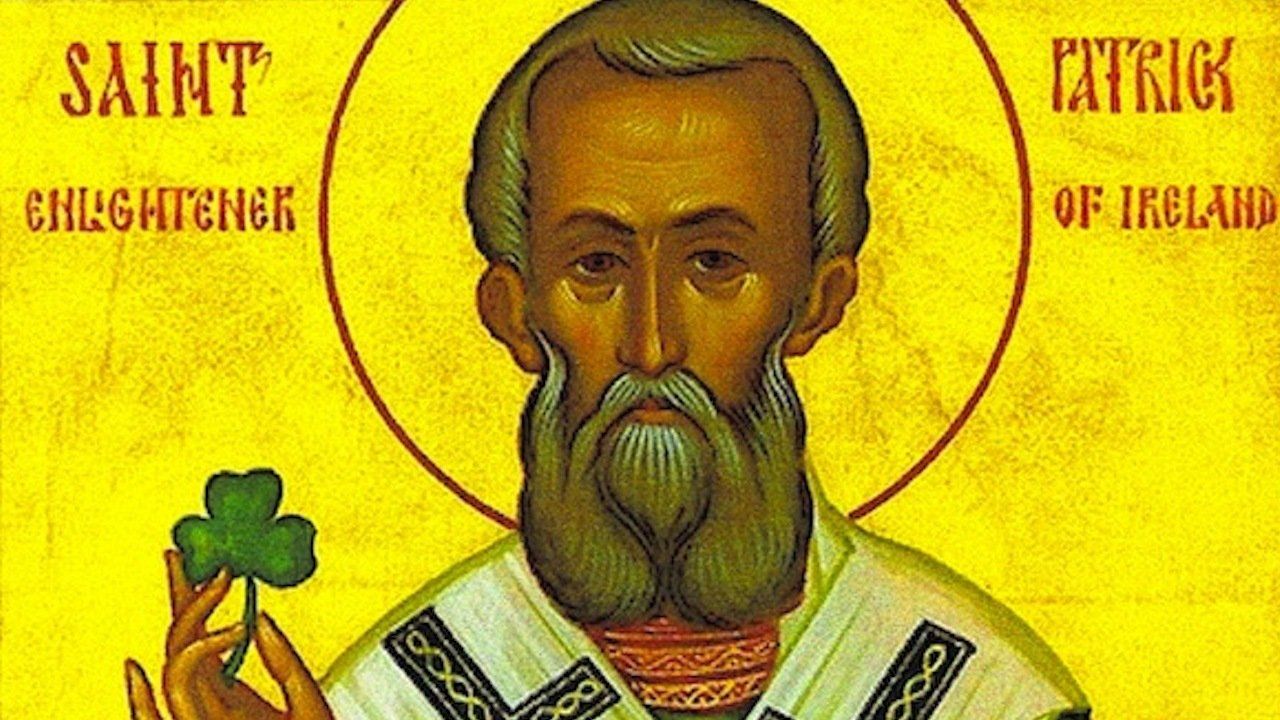
Audite omnes [Hear ye all], lovers of God, the holy merits
Of the man blessed in Christ, Patrick the bishop,
How for his good ways he is likened to the angels,
And because of his perfect life is deemed equal to the apostles.
So begins St. Secundinus’ fifth-century abecedarian hymn to St. Patrick the Enlightener of Ireland (A.D. 385-461). While millions of people around the world annually celebrate this same St. Patrick on what most people simply know as St. Patrick’s Day (149 million celebrated him in the U.S. alone in 2018), the real St. Patrick is barely known. Moreover, most of the celebrations are not worthy of his name. And it is almost certain that few have read the other twenty-two stanzas of this hymn, which are readily available to be read in an important collection of Patrician texts in the Ancient Christian Writers series.
As the subtitle to the series indicates—“The Works of the Fathers in Translation”—this volume offers the most important works of St. Patrick—seven of them, to be exact—in English translation by a leading Patrician scholar. But it’s not just full of Patrician texts. The short and informative introduction to St. Patrick’s life and writings will quickly acquaint the reader with the “holy merits” of the real St. Patrick. And for the serious student, reference can be made to the bibliography of primary sources and modern editions and studies, as well as the extensive textual footnotes (over 300 of them).
As for the included Patrician texts, The Lorica is probably the most well known. One of the many Loricae (literally translated from the Latin as “Armor” or “Breast-Plates”), these Irish prayers or hymns replaced pagan charms when the Irish converted to Christianity; they typically invoked protection from dangers to body and soul. Possibly composed by St. Patrick—the earliest written form is 9th century but a case can be made for oral transmission from St. Patrick himself—this one is a morning prayer that provides a glimpse into St. Patrick’s Nicene faith, repeatedly and eloquently invoking the Holy Trinity: “I arise today through a mighty strength, the invocation of the Trinity, through belief in the Threeness, through confession of the Oneness towards the Creator” (that’s the first five of its 72 lines; it’s also prayed every year at Eighth Day Institute’s annual Feast of St. Patrick – information and registration here).
Also included is a small collection of “Fragments” and “Sayings,” as well as a collection of “Canons” (rules of ecclesiastical discipline) decreed by St. Patrick and his fellow bishops for the development of the emerging Irish Christian community. Since the Feast of St. Patrick usually falls during Lent in both the East and the West, Canon 29 is worth noting for its evidence of the Irish practice of Lent, an early Christian tradition that developed as a period of fasting in preparation for baptism at Easter: “If one of the brethren wishes to receive the grace of God, he shall not be baptized before he has kept the forty days’ fast.”
Most importantly, and substantively, this volume also includes St. Patrick’s Confession and his Letter to the Soldiers of Coroticus. Written at the end of his life—“This is my confession before I die.”—the Confession is the most important primary source for the life of St. Patrick. We learn of his kidnapping from Britain, his enslavement as a shepherd in Ireland, his conversion and life of prayer during his days of slavery and shepherding, the dreams from God that led him home and then back to Ireland as a man with a mission, his miracles, the conversion of Ireland, and as we’ve already glimpsed, his clearly articulated Nicene faith (this portion of the Confession is also recited each year at Eighth Day Institute’s Feast of St. Patrick—information and registration here).
As a fitting supplement to the Confession, the Letter to the Soldiers of Coroticus provides great insight into the style of St. Patrick’s ecclesial oversight. It paints the picture of a bold and protective bishop who, imitating the Good Shepherd as a true shepherd to his Irish flock, threatened to excommunicate the popular British general Coroticus and his soldiers for killing and kidnapping a group of newly baptized Irishmen (men, women, and children). But just as powerfully displayed is the tenderness and mercy of a God-loving (theanthropos) and man-loving (anthropos) bishop. Listen to the real St. Patrick…Audite omnes:
I shall raise my voice in sadness and grief: O you fair and beloved brethren and sons whom I have begotten in Christ, countless of number… I grieve for you, I grieve, my dearly beloved. But again I rejoice within myself. I have not labored in vain. And if this horrible, unspeakable crime did happen – thanks be to God, you have left the world and have gone to Paradise as baptized faithful.… You will reign with the apostles, and prophets, and martyrs. You will take possession of eternal kingdoms… May God inspire Coroticus and his soldiers sometime to recover their senses for God, repenting, however late, their heinous deeds—murderers of the brethren of the Lord!—and to set free the baptized women whom they took captive, in order that they may deserve to live to God, and be made whole, here and in eternity!
Audite omnes. Hear ye all, lovers of God, the holy merits that deemed St. Patrick not only the Enlightener of Ireland, but also equal to the apostles and worthy of our veneration. For as the hymn to St. Patrick with which we opened tells us,
Christ’s holy precepts he keeps in all things,
His works shine bright among men,
And they follow his holy and wondrous example,
And thus praise God the Father in heaven.
Audite omnes. Get the book, read the texts, learn of the real St. Patrick’s holy merits, follow his holy example, and praise God the Father in heaven!
And if you are able, join us as we commemorate and venerate “the man blessed in Christ, Patrick the bishop.”
Share this Post on Your Preferred Platform