Vodka, Medicine, & Meaning in a Pandemic
by Erin Doom
Feast of Sts Agape, Chionia, & Irene the Holy Martyrs; Holy Thursday in East
Anno Domini 2020, April 16
AS THIS IS
a fairly new venture (launched just 21 days ago on the Feast of the Annunciation, March 25), I'm still developing habits and rhythms to add this into an already overwhelming load of daily EDI work. Part of that development includes making one minor change. Each day the Daily Synaxis will be delivered at 6 pm (or as close to 6 pm as possible) and it will be dated liturgically.
What does dating it liturgically mean? Since liturgical days begin at sunset, this means, for example, that today’s issue is dated Holy Thursday (for the East), A.D. 2020, April 16. The explanation for this tradition can be found in the creation account of Genesis 1:5 in which “there was evening” first, and then “there was morning.” It’s also why Vespers (evening prayer) liturgically initiates each day. So here’s the Daily Synaxis for the Feast of Sts. Agape, Chionia, and Irene the Holy Martyrs, and for the Orthodox, Holy Thursday. Dig in.
1. Essays & Reflections: “Vodka & Hand Sanitizer: A History of Alcohol as Medicine” by Mark Mosley
Have you ever thought of alcohol as fundamentally medicinal? Instead, we tend to think of it as a “recreational social lubricant” or as the “demon rum.” But as Dr. Mosley notes,
The inability to shake the vilification of alcohol [in America] is a very recent 19th and 20th century “post-temperance” view that is not expressed in the ancient cultures that preceded our Judeo-Christian heritage, nor in our Christian Churches’ legacy, and not even in our own puritanical American roots.
Mosley goes on to provide a brief but sweeping history of attitudes toward alcohol as medicine, ranging from ancient Egypt to early Church Fathers to the Puritans to Prohibition and beyond. The Puritans caught my attention:
The Puritans drank freely and regularly. When traveling on the Mayflower, the most important person on the ship was the ale-maker, the brewer. Without beer on the ship, the passengers would perish. They didn’t stop at Plymouth due to divine vision, or unfortunate storm, but because they had run low on beer. From the Mayflower logbook of 1620, we read: “Our victuals being much spent, especially our beere.”
I must have missed the day in class when the teacher told us that the Mayflower stopped on Plymouth Rock to pick up some more beer! But it’s a historical fact that the first thing they did upon landing was to commission the ale-maker to go about and make more beer.
After noting that there “was apparently never a time when alcohol (mead, beer, wine) was not viewed as medicine,” Mosley concludes:
What if we put the meaning of wine back into its old wineskin? If it were a medicine given by God used to prevent contamination, to clean a wound, to calm a mind, to provide analgesia for a “cut” (surgery was performed with alcohol as the primary anesthetic)—as well as being the central substance of health, the communion of the religious community? What if we more naturally thought of vodka as a hand sanitizer long before we ever considered it to be something that could get you drunk?
2. Essays & Reflections: “The Pandemic and the Will of God” by Ross Douthat
This piece by Catholic journalist Ross Douthat is one of the best I’ve read on the pandemic thus far. Douthat suggests that
the turn to Easter is an appropriate time to ponder questions of meaning amid the welter of death and suffering worldwide. A pandemic sharpens the permanent questions of theodicy, the debates over whether it’s reasonable to believe in a good and loving God in a world so rife with misery. But because any justification of God’s ways can seem smug and abstract when set against the awful particularities of sorrow, believers often eschew frontal debate in these moments, emphasizing solidarity and mystery rather than burdening the suffering with our moral speculations.
But as he makes clear later in the article, solidarity and mystery are not always sufficient:
To people experiencing the sharpest grief, contemplating the dying body and the open grave, a response of simple solidarity and lamentation is appropriate. But many people suffer more slowly and less sharply; even in this pandemic, much suffering will be doled out in slow doses as its social and economic consequences spread. Meanwhile, even people suffering the sharpest pain will eventually leave the graveside and begin life after tragedy. And in both cases — suffering that endures and suffering that belongs to the past — there is a need for something more than solidarity as time goes by; there is a need for narrative, for integration, for some story about what the pain and anguish meant.
The pandemic raises all sorts of questions – moral, theological, anthropological, economical, etc. And as Douthat concludes, they all deserve to be heard and wrestled with for the life of our world:
Asking these questions does not imply crude or simple answers, or answers that any human being can hold with certainty. But we should still seek after them, because if there is any message Christians can carry from Good Friday and Easter to a world darkened by a plague, it’s that meaningless suffering is the goal of the devil, and bringing meaning out of suffering is the saving work of God.
Read the whole piece here. It’s well worth your time. (You may have to create a NYT account, but all it requires is an email and a password, i.e., no cost.)
3. Essays & Reflections: “COVID-19: Theology, Theodicy, & Meaning” by Jivko Panev and Jean-Claude Larchet
As good as Douthat’s piece is, if I had to select only one piece to recommend related to the coronavrirus, it would be an interview conducted by Jivko Panev with Orthodox theologian Jean-Claude Larchet. Here’s Larchet’s answer to why God, if He is good and all-powerful, does not abolish sickness and suffering in this world, and why they persist when Christ has overcome them for all humanity:
This is a strong objection among atheists, and often raises doubts among believers. The answer of the Fathers is that God created man free, and respects man’s free will even in its consequences. Because sin is perpetuated in the world, its consequences continue to affect human nature and the entire cosmos.
Christ removed the necessity of sin, put an end to the tyranny of the devil, and made death harmless, but he did not remove sin, the action of demons, physical death, or the consequences of sin in general, so as not to force and deny the free will that caused it. On the physical level, the fallen world remains subject to its own logic. For this reason, too, illness affects each person differently, and this is particularly striking in the case of an epidemic: according to individual physical constitutions, it affects some and spares others; it affects some slightly and affects others severely; it causes some to die and leaves others alive; it kills teenagers and spares great old men.
Only at the end of time will the restoration of all things take place and there will appear "a new heaven and a new earth," where the order and harmony of nature destroyed by sin will be restored in a nature raised to a higher mode of existence, where the goods acquired by Christ in his redemptive and deifying work of our nature will be fully communicated to all who have united themselves with him.
You can read the full 8000-word interview here at orthodoxie.com. Or you can read a condensed 4000-word version that I put together here. See #7 on Liturgy below for the prayer at the end of the interview - we should all be praying it daily.
4. Books: Mental Disorders & Spiritual Healing
by Jean-Claude Larchet
In this fascinating book, Larchet notes that the early Church Fathers “recognized three main origins of mental illness – somatic (or organic), demonic, and spiritual (defined as one of the passions developed to the extreme) – and he introduces a fourth unlikely and surprising category to their discussion, the fool for Christ.” Read the full Eighth Day Books review here
and be sure to order a copy from Eighth Day Books.
5. Poetry: “Idiot Psalm 1” by Scott Cairns
– a psalm of Isaak, accompanied by Jew’s harp
O God Belovéd if obliquely so,
dimly apprehended in the midst
of this, the fraught obscuring fog
of my insufficiently capacious ken,
Ostensible Lover of our kind – while
apparently aloof – allow
that I might glimpse once more
Your shadow in the land, avail
for me, a second time, the sense
of dire Presence in the pulsing
hollow near the heart.
Once more, O Lord, from Your Enormity incline
your Face to shine upon Your servant, shy
of immolation, if You will.
6. Bible:
1 Cor. 11:23-32, Matt. 26:1-20, Jn. 13:3-17, Matt. 26:21-39, Lk. 22:43-44, Matt. 26:40-75 and 27:1-2. Online here.
7: Liturgy: A Prayer by Patriarch Daniel of Romania
O Lord our God, who are rich in mercy and who with diligent wisdom guide our lives, hear our prayer, receive our repentance for our sins, put an end to this epidemic.
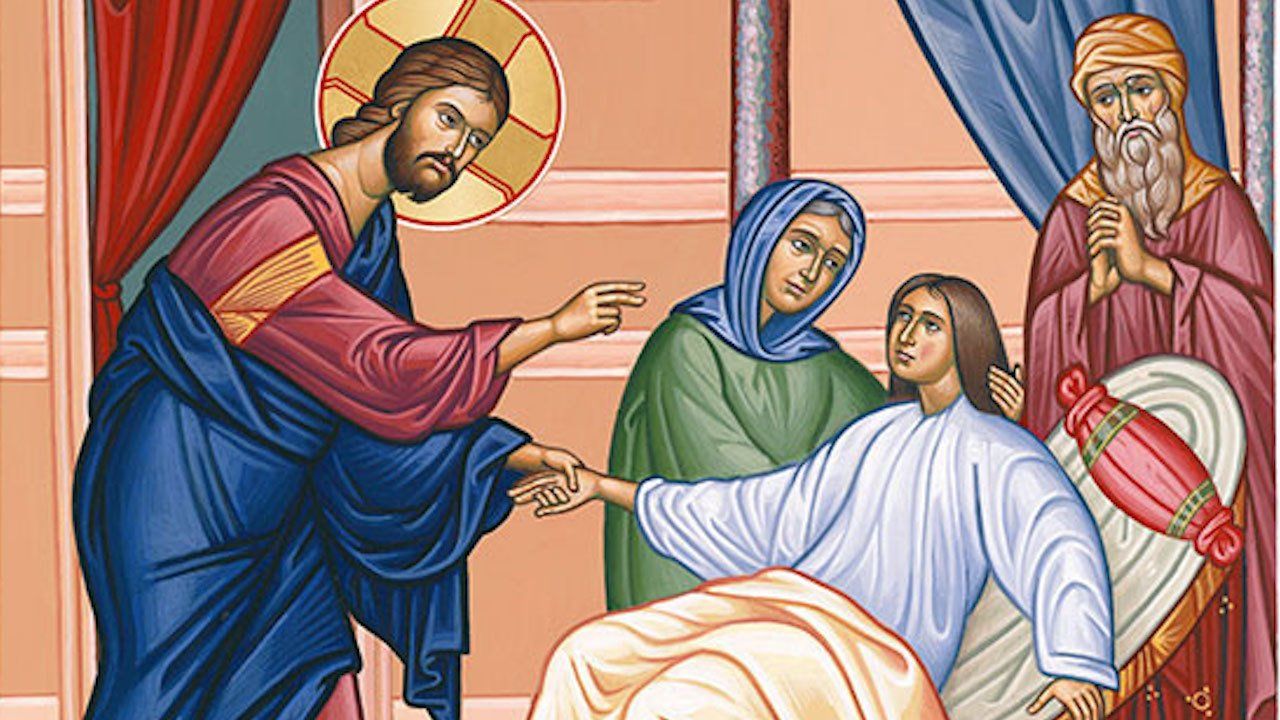
You who are the physician of our souls and bodies, grant health to those who are afflicted by sickness, making them rise promptly from their bed of sorrow, so that they may glorify You, the merciful Savior.
Preserve those who are healthy from all sickness.
Preserve us, Your unworthy servants, and our parents and relatives.
Bless, strengthen, and guard, O Lord, by Your grace, all those who, with love for humankind and a spirit of sacrifice, care for the sick in their homes or in hospitals.
Remove all sickness and suffering from Your people, and teach us to appreciate life and health as gifts that come from You.
Grant us, O Lord, Your peace and fill our hearts with an unshakeable faith in Your protection, hope in Your help, and love for You and for our neighbor.
For it is Yours, O our God, to have mercy on us and to save us, and we glorify you: Father, Son, and Holy Spirit, now and ever and unto the ages of ages. Amen.
8. Word from the Fathers: "The One Physician" by St Ignatius of Antioch
Here’s a short creedal excerpt from a passage written by St. Ignatius of Antioch to the Ephesians:
There is only one Physician—
Very Flesh, yet Spirit too;
Uncreated, and yet born;
God-and-Man in One agreed,
Very-Life-in-Death indeed,
Fruit of God and Mary’s seed;
At once impassible and torn
By pain and suffering here below:
Jesus Christ, whom as our Lord we know.
**If you’d like to receive the Daily Synaxis
in your inbox each Mon-Fri, you can subscribe here.
**All books (and icons) in print available from Eighth Day Books. Please support an independent bookstore that believes in the eighth day resurrection of our God and Lord and Savior Jesus Christ. Give them a call at 1.800.841.2541 or visit their website here. And don’t forget Eighth Day Members (Patrons+) receive 10% discount, plus many other perks! Learn more and support cultural renewal here.
Share this Post on Your Preferred Platform
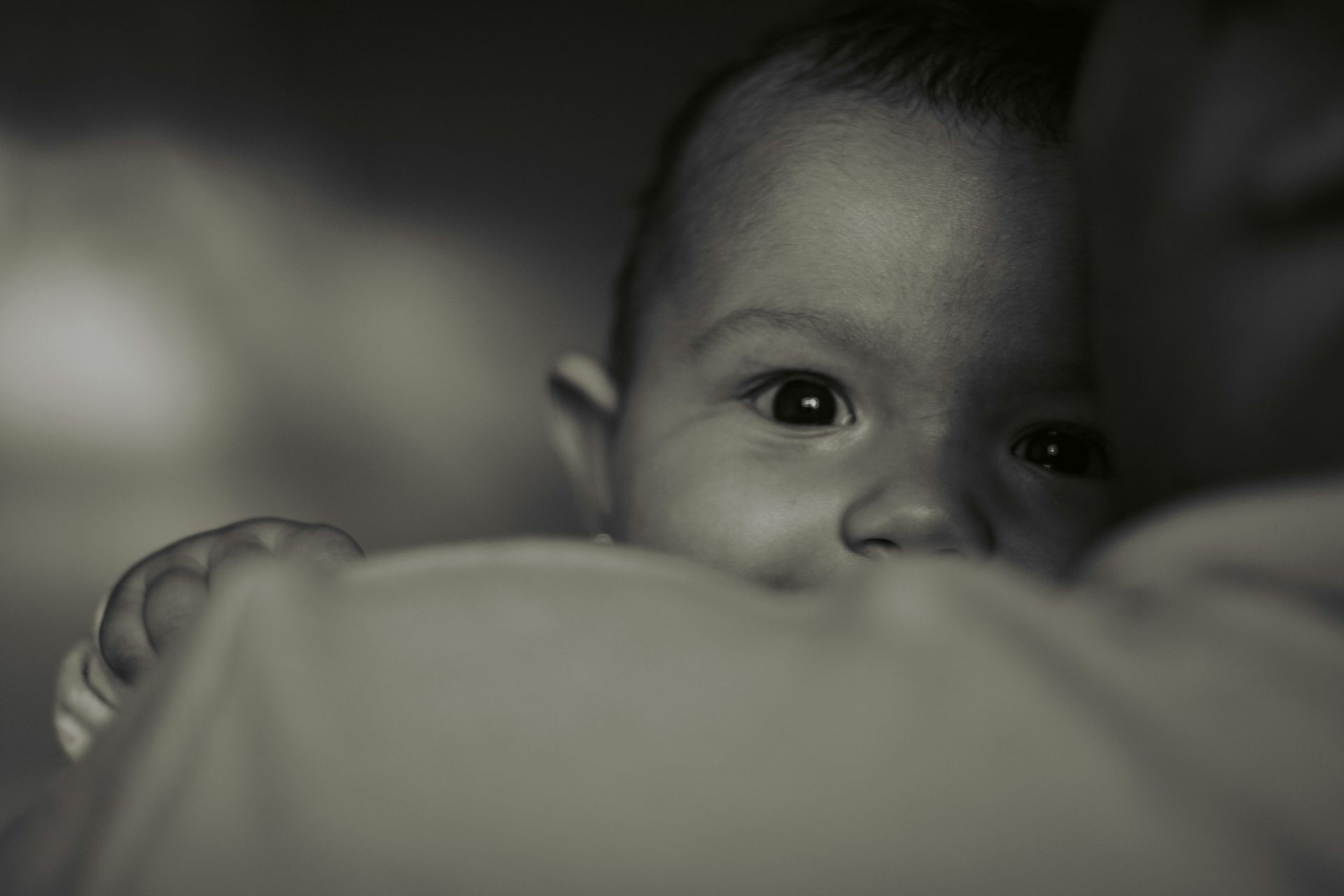
Inside the head of my three-month-old granddaughter, Lucy, said G.K. Chesterton is, "a new universe, as new as it was on the seventh day of creation...a new system of stars, new grass, new cities...and new seas." And this is because, he adds: The gravity of astonishment at the universe...dwells in the eyes of a baby three-months-old [and] the universe is put upon its trial and forces us actually to remodel our conduct...we seem to be dealing with a new race, only to be seen through a microscope...[with] delightful bulbous heads, three times too big for the body. But Chesterton's central thesis in this essay is not that babies are so marvelous, but that our treatment of each other as adults, in contrast, is so broken. "It is our attitude towards grown-up people that is wrong," he writes, because we no longer see each other with astonishment and wonder (unless, that is, we are falling in love). But babies remind us that humans really are astonishing, and this "revolutionary theory of the marvelousness of all things" should force us to "remodel our conduct" toward everyone we meet. A baby seems to be a necessary icon for us, correcting our eyesight which grows old and struggles to see "the weight of glory" in each other as teenagers, adults, and perhaps especially, as old people. Even though he did not reference icons in his essay, we seem to drift very easily into what could be called a type of iconoclasm, an inability to see each other as image bearers of God Himself. William Wordsworth describes us as "trailing clouds of glory" when we first arrive here "from God, who is our home." But soon, he says, "shades of the prison-house" begin to smother us, and we forget. "We bow to grown people," says Chesterton in this same essay, "take off our hats to them, refrain from contradicting them flatly, but we do not appreciate them properly." God speaks to us, like we are working through in St. John of Damascus , through the "cataphatic or apophatic spectrum of theology," or literally from the spoken word (cataphatic) or unspeakable word (apophatic). Apophatic I noticed has the same root in Greek as Infant does in Latin. Both mean "unspoken." God has given us both bibles and babies, speechless wonders through which He means to unglaze our eyes and fill us with astonishment. MARK C. WATNEY is professor emeritus at Sterling College, assisting in its newly established C. S. Lewis Center. He has given papers at Harvard's Center for Hellenic Studies and Dordt College
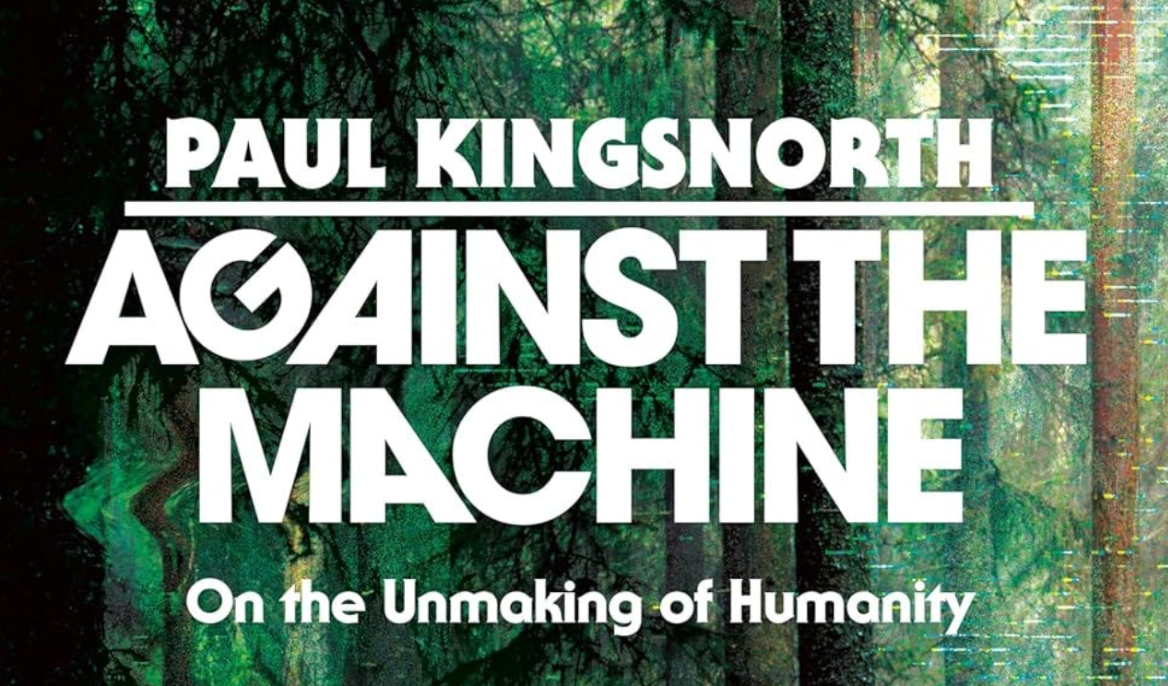
"God became man, so that man might become God." St. Athanasius the Great, On the Incarnation (54:3) These words from St. Athanasius may sound, at first blush, provocative. However, St. Athanasius is restating, perhaps more simply, what St. Peter says in his second epistle: the promise of being united to Christ is that men and women made in His image will partake in His divine nature (2 Peter 1:4). Paul Kingsnorth's latest book, Against the Machine, inverts this idea and opens our eyes to the world emerging at a rapid rate, the world dominated by what he calls The Machine. The new mantra of The Machine age is, instead, this: Man will become God by Man's own self-creation. Reading Kingsnorth is not for the faint of heart. It's easy to be overcome by despair. The goal of the Machine age is "transhumanism", to be liberated from the constraints of the body. For the transhumanist (self-described), the future is disembodied. The future is limitless. But this is not liberation. Because the Machine is not limited to the physical world, it follows naturally there is a spiritual nature to this lifestyle, what he ultimately identifies as a manisfestation and/or manipulation of the demonic. Whether or not you agree with his ultimate conclusion, we can see its effects. An entire generation, and many across generations, addicted to screens. Disintegration of communal life, most disastrously in the breakdown of the family. Increasing rates of loneliness, depression, and suicide, especially among children. It's clear we need a Savior, and the Machine isn't it. Instead, Kingsnorth encourages us toward a revival of community, men, women, and children living embodied lives in the same space and time: working together, eating together, worshipping together, loving each other, carrying each other's burdens. If this sounds like Eighth Day Institute...if this sounds like what the Church is meant to be, it is because this is exactly what the Church is. We are saved together in Christ. MICHAEL SIMMON currently serves as the Secretary of Eighth Day Institute Board of Directors and Coordinator for Hall of Men. He resides in Wichita, Kansas with his wife and four children.
"What is it that has ordered the things of heaven and those of earth, the things which move through the air and those which move in the water; nay, rather the things which proceeded them: heaven and earth and the natures of fire and water? What is it that combined and arranged them...set them into motion and put them on their unceasing and unhindered course?..But who is the architect of these things? Or did not he who made them also bring them into being? We shall certainly not attribute such power to spontaneity." On the Orthodox Faith, Chapter 3 This comes after St. John of Damascus sets out to delineate between the created and the uncreated, a fact which, while at the core of existence, seems for him to be, for this very reason, the simplest to believe. Everything but God is created and, thus, susceptible to change. This means people, but this also means demons, angels, the rest of the created order across the entire cosmos. Everything is vulnerable to unrest. Except for God. If you have ever tried to explain the Holy Trinity to a child for the first time, maybe you have felt as I have the weightier, inexpressible side of God's unchangeability: how do I possibly communicate this essential fact to the person in front of me? (This is usually when my faint stutter starts to pop up again.) I like that here, like St. Patrick reaching for a three-leaf clover, St. John brings us back to earth to better understand the cosmos. Fire and water are no less mysteries than heaven and earth. And yet here we are, cooking and washing, eating and drinking, filled and sustained on what we can neither fully explain nor claim to have created. Only God is unchanging. Vice versa, God is the only constant we need. Maybe the rest is better left unsaid. LUKE TAYLOR GILSTRAP is Vice President of the Board of Directors for Eighth Day Institute. His poems have appeared in Spiritus, Ekstasis (Christianity Today), and Relief Journal, among others. He lives happily in Wichita, Kansas with his wife and three sons.

"Now, one who would speak or hear about God should know beyond any doubt that in what concerns theology and the Incarnation not all things are inexpressible and not all are capable of expression, and neither are all things unknowable nor are they all knowable. That which can be known is one thing, whereas that which can be said is another, just as it is one thing to speak and another to know. Furthermore, many of those things about God which are not clearly perceived cannot be fittingly described, so that we are obliged to express in human terms things which transcend the human order. Thus, for example, in speaking about God we attribute to Him sleep, anger, indifference, hands and feet, and the like." On the Orthodox Faith, Chapter 2 When I was studying Fiction in graduate school, one of the first methods I learned to really situate the reader in the story you were about to tell them was disorientation; if you wanted to ground them in one story, first you had pull the rug out from under their feet. So it's fitting that in the beginning of St. John Damascene's On the Orthodox Faith, before rebuilding our foundation, he first puts us squarely in limbo, seesawing back and forth between certainty and uncertainty. To paraphrase, there is no doubt (certainty) that about God some things can be expressed...but not all things (uncertainty). Some things about God are truly knowable (certainty), but some are unknowable (uncertainty). Oh, and while we're speaking about God (certainty), let's admit there's a gap, too, between what we say and what we know (uncertainty). My favorite line in this spiraling excerpt, "...it is one thing to speak, and another to know," takes me back to the final lines in Wendell Berry's poem, "How to Be a Poet," which he wrote primarily as a reminder to himself: Accept what comes from silence. Make the best you can of it. Of the little words that come out of the silence, like prayers prayed back to the one who prays, make a poem that does not disturb the silence from which it came. Wherever your preferences fall on the cataphatic or apophatic spectrum of theology (whether you lean more toward what we can say about God or what we cannot), Berry's poem, I think, would nod along with St. John: before we say too much, let our words be preserved by the silence from which they came. I'm thinking of the silence, that filling, restorative quiet I feel when I step into a cathedral or in some of my favorite moments with my kids in the early hours. Even before praying, can we hear the One already praying in us? Let's start there. LUKE TAYLOR GILSTRAP is Vice President of the Board of Directors for Eighth Day Institute. His poems have appeared in Spiritus, Ekstasis (Christianity Today), and Relief Journal, among others. He lives happily in Wichita, Kansas with his wife and three sons.
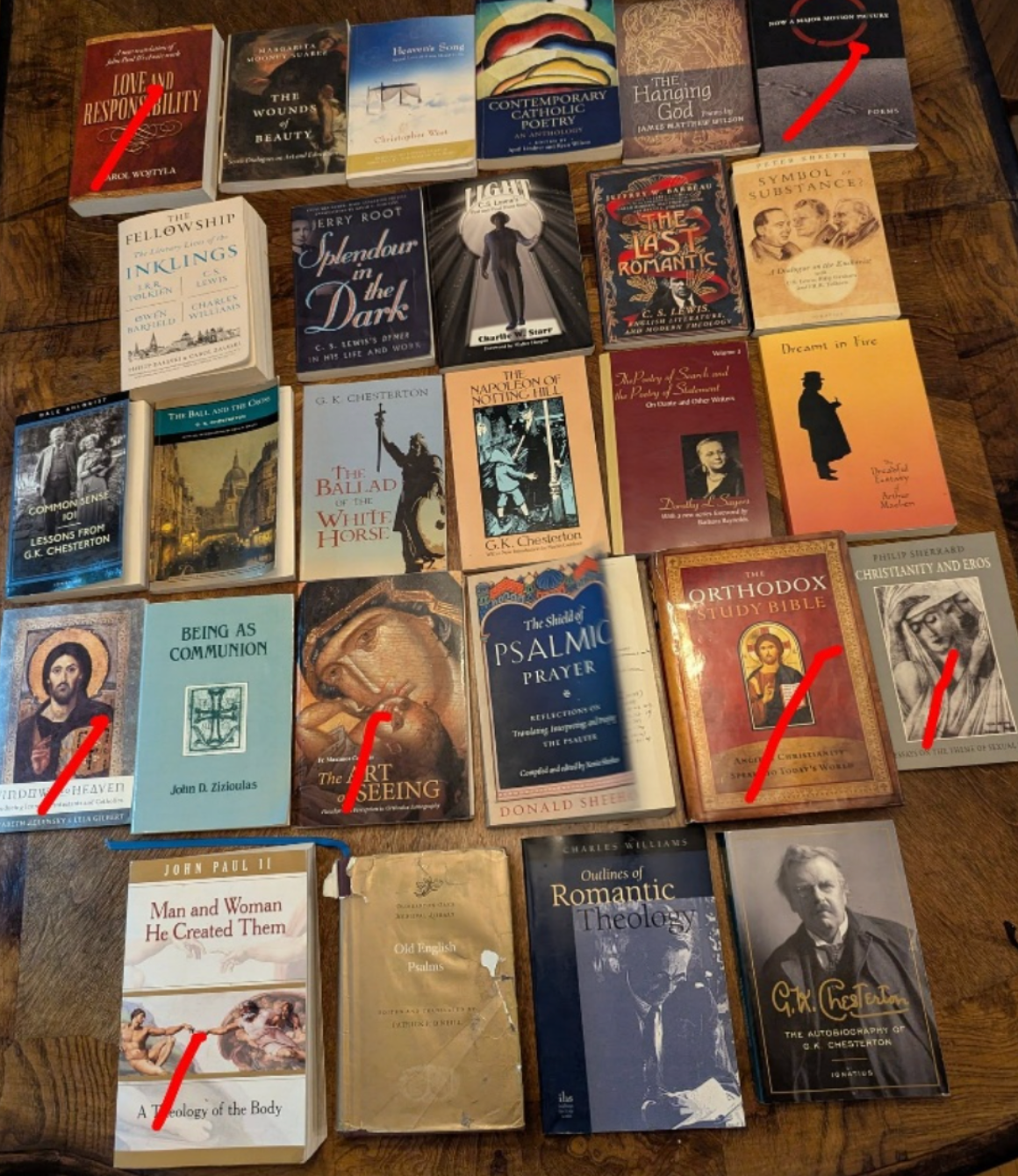
Late-Night Bookstores and Spiritual Reading
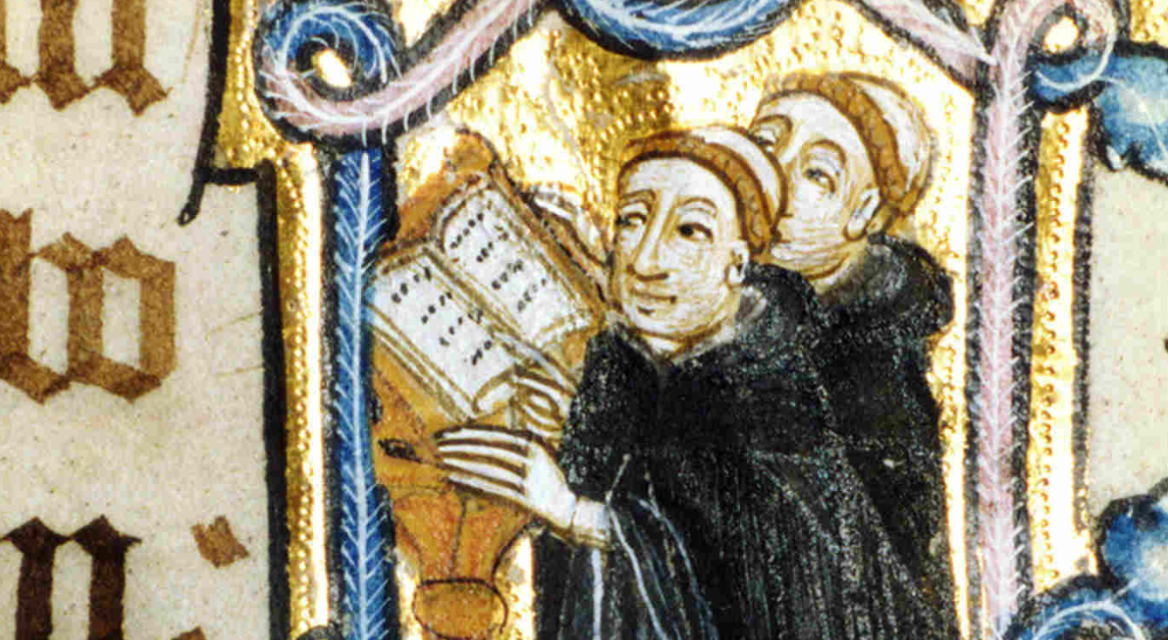
On St. Benedict and the Making of Vows

The Pursuit of Truth in the Age of AI

On the Theology of Raising Chickens

G.K. Chesterton and Raising Small Children
"Seal of the Fathers"