Gregory the Wonderworker's Heavenly Vision
by St Gregory of Nyssa
Feast of the Holy Prophet Obadiah
Anno Domini 2020, November 19
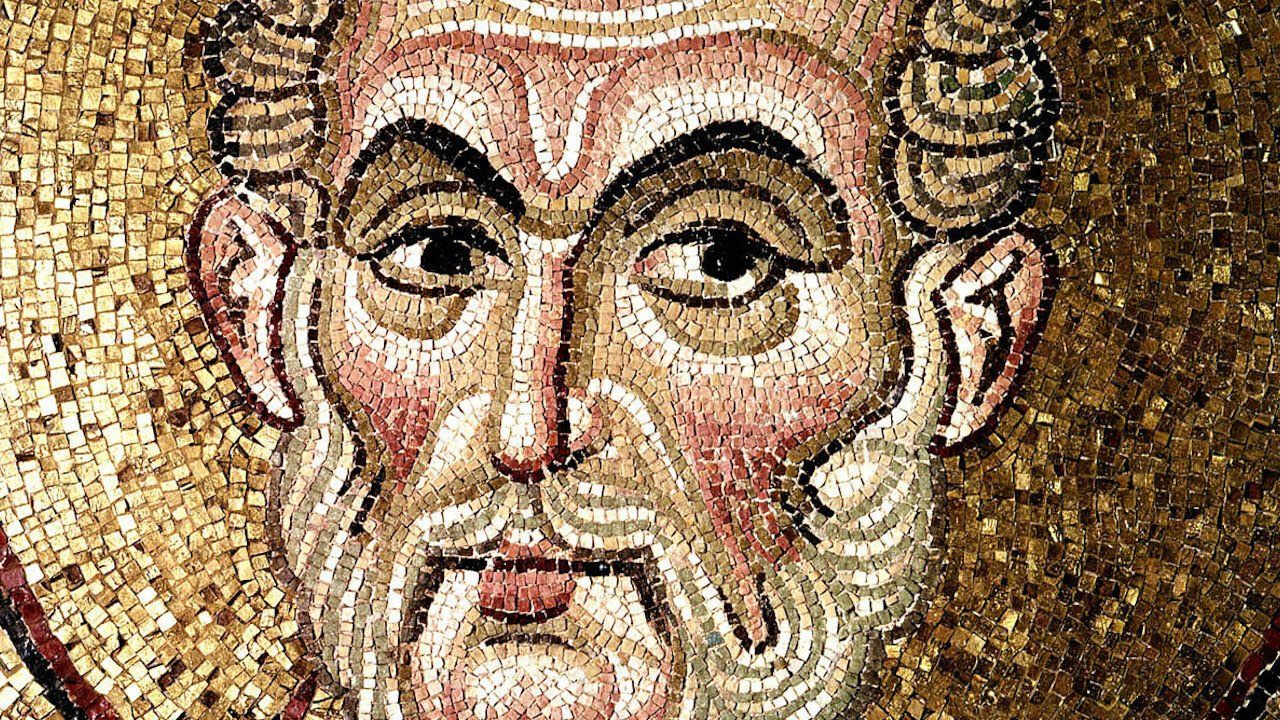
So when he had thus willy-nilly come under the yoke and later all the proper ceremonies had been carried out on him, and having requested a little time from the one who had summoned him to the priesthood to come to an understanding of the exact purport of the mystery, he no longer, as the Apostle says, thought it right to pay heed “to flesh and blood,” but asked that he be given by God a manifestation of what is hidden. And he did not feel confident in preaching the word until the truth had been revealed to him in some visible way.
For while he was concentrating during the night on the doctrine of faith, and turning over all sorts of thoughts in his mind (for even then there were those who were falsifying the true doctrine, and through the plausibility of their proposals often making the truth unclear even to experts)—to him, then, as he was lying awake and pondering, someone appeared in a vision, in a human shape, elderly looking, very dignified in garb, displaying every virtue in the grace of his countenance and the calmness of his appearance. Astonished at the sight, he got up from his bed to learn who this might be and why he had come. When the latter calmed his distress of mind with a quiet voice and said that he had appeared to him by divine command on account of the matters about which he was uncertain, so that the truth of the orthodox faith might be disclosed, he took heart at the word and looked to him with joy and amazement.
Then as the figure suddenly extended his hand and by the line of his fingers indicated to him what appeared at his side, he turned his eyes to where the hand was pointing and saw, across from the one he had seen, another vision, in female form, larger than human size. Astonished once again, he lowered his eyes to himself and was at a loss at the sight, not able to bear to look at the manifestation. For the paradox of the vision lay precisely in this, that although the night was far advanced, light illumined the appearances for him, like something bright lighting a lamp. Therefore since he was not able with his eyes to bear the vision, he heard through a kind of word those who had appeared to him discussing with each other the doctrine about which he was pondering, so that he not only was instructed as to the true knowledge of the faith but also recognized the ones who had appeared by their names, since each of them addressed the other by their proper name.
For he is said to have heard from the one who appeared in female form as she urged the evangelist John to show the young man the mystery of the truth; and that the latter said that he was ready to indulge the mother of the Lord also in this, since it pleased her. And when he had thus uttered the doctrine, balanced and clearly defined, they again vanished from view. And he is said to have written down that divine initiation as soon as possible, and afterwards to have used it as the basis for his preaching in the church and to have left that God-given teaching to his successors as a kind of inheritance, by which the people there are initiated to this day, thus remaining unaffected by every heretical wickedness.
Now the words of the initiation are these:
One God: Father of the living Word, subsistent wisdom and power and eternal impress; perfect begetter of perfect; Father of only-begotten Son.
One Lord: only from only; God from God; impress and image of the Godhead; effective Word; wisdom embracing the structure of the universe, and power which makes the entire creation; true Son of true Father; invisible of invisible, and incorruptible of incorruptible, and immortal of immortal, and eternal of eternal.
One Holy Spirit: holding existence from God, and manifested through the Son (namely to human beings); perfect image of the perfect Son; life the cause of living things; holiness who makes sanctification possible; by whom is manifested God the Father, who is over all and in all, and God the Son, who is through all.
Perfect Trinity: in glory and eternity and sovereignty neither divided nor estranged.
(Therefore there is nothing created or subservient in the Trinity, nor anything introduced which did not exist before but came later. Therefore neither did the Son fall short of the Father, nor the Spirit of the Son; but the same Trinity remains always undisturbed and unaltered.)
Whoever would like to be convinced of this should listen to the church, in which he proclaimed the doctrine, where the very inscriptions of that blessed hand are preserved to this very day. Do these not rival in the marvelous nature of their grace those divinely fashioned tablets of stone? I refer to those tablets on which the legislation of the divine will was engraved. For just as the word says that Moses, having left the world of appearances and calmed his soul within the invisible mysteries, and in person instructed the whole people in the knowledge of God, the same dispensation is to be seen in the case of this Great One. He had not some visible mountain of earth but the pinnacle of ardent desire for the true teachings; for darkness, the vision which others could not comprehend; for writing-tablet, the soul; for the letters graven on the stone tablets, the voice of the one he saw; through all of which both he and those initiated by him enjoyed a manifestation of the mysteries.
He was filled with a certain boldness and confidence through that vision, like an athlete who, since he has enough experience from competition and strength from training, strips confidently for the race and prepares for combat against his competitors; now he likewise, suitably anointed in soul by his care for himself and by the assistance of the favor which was revealed to him, thus undertook his struggles—for his whole life in the priesthood deserves to be called nothing less than struggles or contests in which through faith he combatted every power of the Adversary.
*“Life of Gregory the Wonderworker” by St Gregory of Nyssa in St Gregory Thaumaturgus: Life and Works, The Fathers of the Church vol. 98, translated by Michael Slusser (Washington, D.C.: Catholic University of America Press, 1998), 52-56. Available for purchase from Eighth Day Books.
Share this Post on Your Preferred Platform