Hagia Sophia, Confederate Statues, and Batman
by Mark Mosley
Feast of the Transfiguration
Anno Domini 2020, August 6
“As long as we dwell on how someone offends us, we have no peace”
~Elder Thaddeus
All cards face up and I will push them to the center of the table: I am an Orthodox Christian. I am white from a southern heritage. And I love Batman (the Christopher Nolan one). What do these three have in common? They represent a way of life that is valued for its good. They are also reflective of a type of moral place in society that battles for truth and justice.
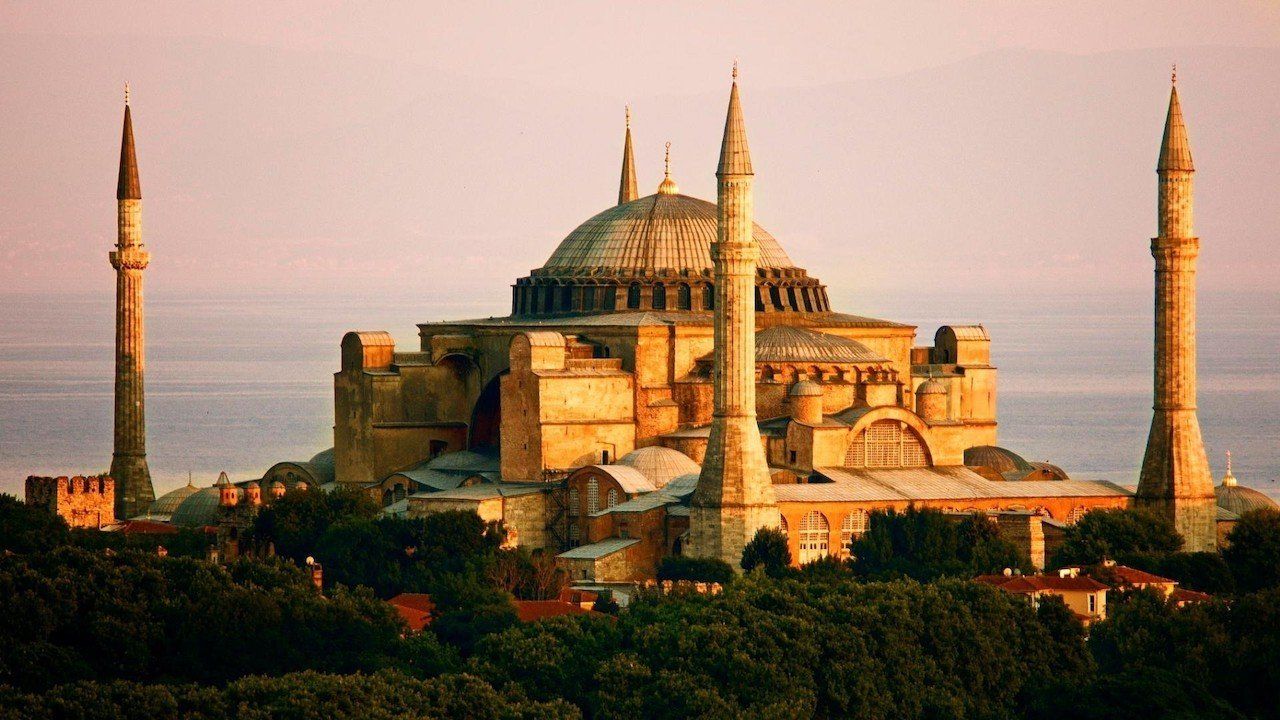
What makes these ideals difficult, even diabolical, depends upon the viewpoint and the lens through which these cultures and beliefs are experienced. If you are an Orthodox Christian, you will likely view Hagia Sophia differently than if you are Muslim. If you are a white Southerner, you will likely view a Confederate statue differently than if you are an African-American. This emotional dichotomy drives—even torments—the character of Bruce Wayne between what he is (the heir of a corrupt politician who favors the rich) and the person he wants to be (a legend of truth and justice).
I am using the Hagia Sophia, Confederate statues, and Batman as literary illustrations of a basic human psychological phenomenon. Truth be known, I am a convert to Orthodoxy and have never visited the Middle East. I was born and reared in Oklahoma which was not even a state during the Civil War (though partial credit is given in that my mother was from Alabama). And I am not sure of the difference between Marvel and DC Comics. (Please don’t stop reading—I was joking about the comics.) We are never quite everything that we believe we are.
The need to convert or kill who we fear, to tear down a grievous sin or trauma, or to put a mask over the person we wish we weren’t is part of the mental scaffolding of the human condition. In psychological terms, we would call it “denial” or “projection.” Our anger, misbehavior, and destruction is the language of the wounded. How do we bring healing to these wounds in ourselves and others?
David, the King of Israel and the arbitrator of Divine retribution, is also the adulterer of Bathsheba and the murderer of her husband. And yet we pray and sing his songs as the foundation of our Christian worship. We call him “a man after God’s own heart.” Does he not deserve to be “canceled”? In Psalm 50 (Septuagint), Saint David says, “My sin is ever before me.”
Remembering is the first necessary act of repentance: “Don’t you remember when you….”And remembering is the central act of Christian worship: “Do this in remembrance of Me.” No transformation can take place without remembrance. Remembrance is not simple recall. Remembrance is entering into another time with emotion, thought, and will. Remembrance is cohabitating with past history. We take a pilgrimage back in order to move forward with a peace that heals. One submits to history transforming us, without us transforming it.
We do not visit the past to forget or destroy it. We visit the past so that, by the mercy of God, it stays ever before us—both individually and communally, its light and its darkness. Forgiveness and resilience are not produced by guilt held onto—they are born from guilt faced, so that you can be set free.
The primary agony with the Hagia Sophia is not that it has been turned back into a mosque with drapes covering the icon of Christ. Rather, it’s that most Christians throughout the world have no idea what the Hagia Sophia is. And while they may have some vague recall of it being a church in Turkey, we do not remember
the Hagia Sophia. We don’t visit it with our soul. It is a meaningless relic of Church history that we have not made part of our personal history. To become outraged now, knowing nothing more than “the Muslims have taken over our Church,” seems disingenuous.
And the same can be said of Confederate statutes. The problem is not
the statues of white generals who owned slaves that are put in public parks; it is that most of us have never stopped to look at the statue. And even fewer have gone home to read about the “guy” in the statue.
I understand the righteous anger of destroying a statue or structure that symbolizes slavery or an oppressed way of life (like a statue of Lenin or a Berlin Wall). But the desire to “ethnically cleanse” the Confederate South by destroying any statues or monuments of people who owned slaves is counterproductive to “changing the hearts and minds” of those in our culture. You don’t destroy the evil of history by destroying the history. You destroy the evil by keeping the history—by staring at it, and remembering it ever before me. If you want to wake up a Christian Southern white boy like me, keep showing me the photographs of the young black man hanging from a tree with white Christian men around him who could be my grandfather. Make sure I see that. Just tearing up a picture of my grandfather does nothing but incite me to strike back.
And as for Batman, he is driven by his childhood memory that he cannot escape. He is a dark knight who is much more like the villains than he can bare to admit. The sin of “being just like my enemy” is ever before him. He even dresses like his inner demons. Batman is plagued because he cannot stop remembering. But Batman, unlike King David, struggles with receiving mercy. Justice is the shackle on his soul.
There is a Russian proverb in Solzhenitsyn’s Cancer Ward, “Look at history and lose an eye. Neglect history and you will go blind.” We need history, both personal and communal. We need monuments, statues, symbols, and images from history, especially the shameful ones, so they can “be ever before us.” We desperately need to tell stories of the full, complicated, and often dark, incongruent lives behind the curtains, buried underneath the monuments. We must come to the realization that we have been on both
sides of the drapes which separate the Koran from Christ. When we see the white Confederate statue, we must know that any
of us, regardless of the color of our skin, has the capacity to put one man in stone and another in chains. In a sense, we are all Batman, a dark complex figure, as much villain as hero, as much criminal as king, as much sinner as saint. We do not become our “better selves” by tearing down and covering up our worst self; nor by putting on a mask and becoming a vigilante.
Admittedly, I have taken three topics of which I know little only to make the point that we must see the enemy in us, and we must see ourselves in our enemy. We must make peace with that enemy. Only by the grace of God can we then “come to ourselves,” turn around and face ourselves, take down the curtains and the capes, walk humbly with our sin ever before us, and remember
the love and mercy of the Father who gives us the freedom to live with ourselves.
*I have intentionally not used the term “cancel culture” because it has become so amorphous and encompassing that I am no longer really sure what it means.
**For a beautiful story of the Hagia Sophia, see Justinian’s Flea
by William Rosen, chapter 4: “Solomon, I Have Outdone Thee.”
Share this Post on Your Preferred Platform
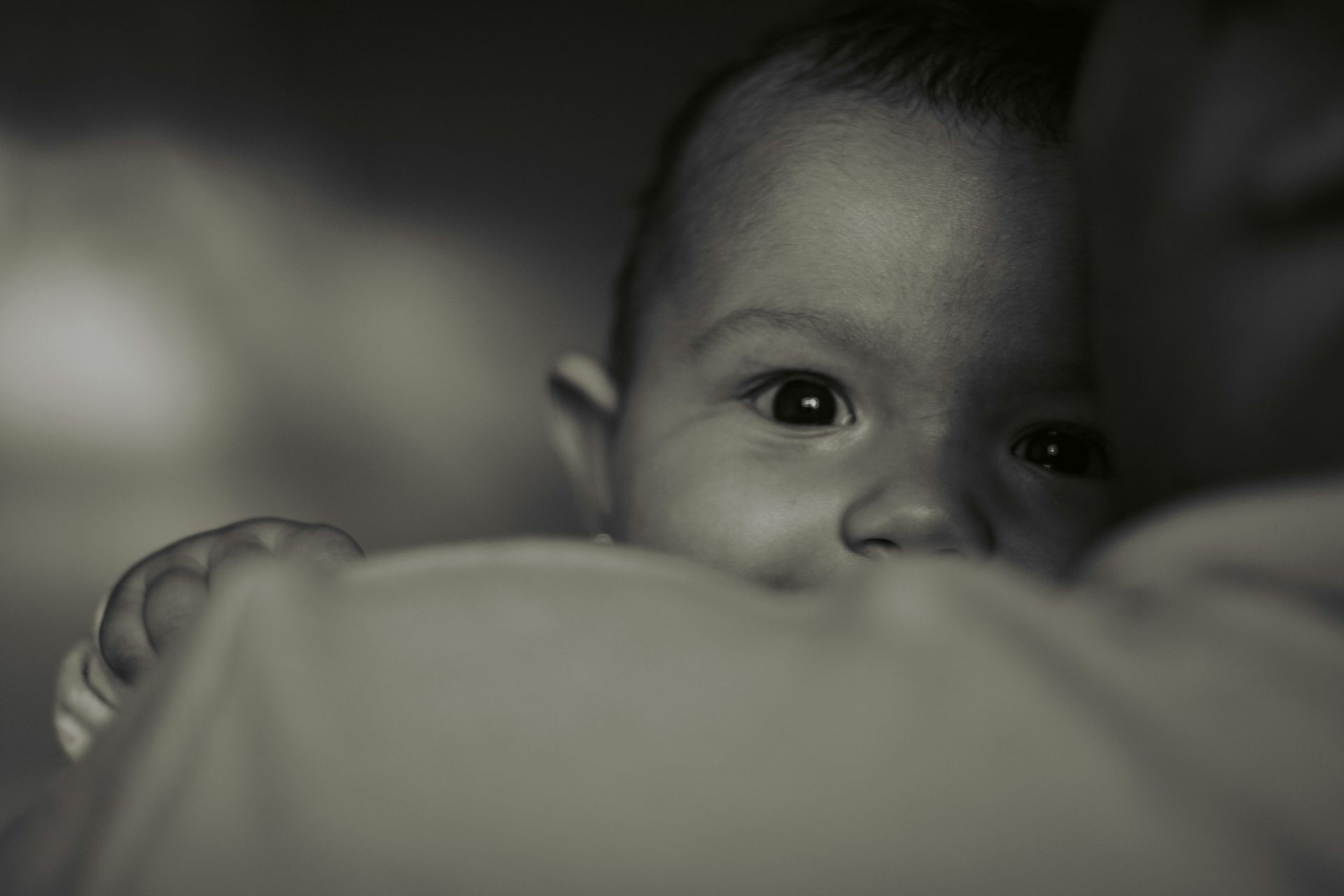
Inside the head of my three-month-old granddaughter, Lucy, said G.K. Chesterton is, "a new universe, as new as it was on the seventh day of creation...a new system of stars, new grass, new cities...and new seas." And this is because, he adds: The gravity of astonishment at the universe...dwells in the eyes of a baby three-months-old [and] the universe is put upon its trial and forces us actually to remodel our conduct...we seem to be dealing with a new race, only to be seen through a microscope...[with] delightful bulbous heads, three times too big for the body. But Chesterton's central thesis in this essay is not that babies are so marvelous, but that our treatment of each other as adults, in contrast, is so broken. "It is our attitude towards grown-up people that is wrong," he writes, because we no longer see each other with astonishment and wonder (unless, that is, we are falling in love). But babies remind us that humans really are astonishing, and this "revolutionary theory of the marvelousness of all things" should force us to "remodel our conduct" toward everyone we meet. A baby seems to be a necessary icon for us, correcting our eyesight which grows old and struggles to see "the weight of glory" in each other as teenagers, adults, and perhaps especially, as old people. Even though he did not reference icons in his essay, we seem to drift very easily into what could be called a type of iconoclasm, an inability to see each other as image bearers of God Himself. William Wordsworth describes us as "trailing clouds of glory" when we first arrive here "from God, who is our home." But soon, he says, "shades of the prison-house" begin to smother us, and we forget. "We bow to grown people," says Chesterton in this same essay, "take off our hats to them, refrain from contradicting them flatly, but we do not appreciate them properly." God speaks to us, like we are working through in St. John of Damascus , through the "cataphatic or apophatic spectrum of theology," or literally from the spoken word (cataphatic) or unspeakable word (apophatic). Apophatic I noticed has the same root in Greek as Infant does in Latin. Both mean "unspoken." God has given us both bibles and babies, speechless wonders through which He means to unglaze our eyes and fill us with astonishment. MARK C. WATNEY is professor emeritus at Sterling College, assisting in its newly established C. S. Lewis Center. He has given papers at Harvard's Center for Hellenic Studies and Dordt College
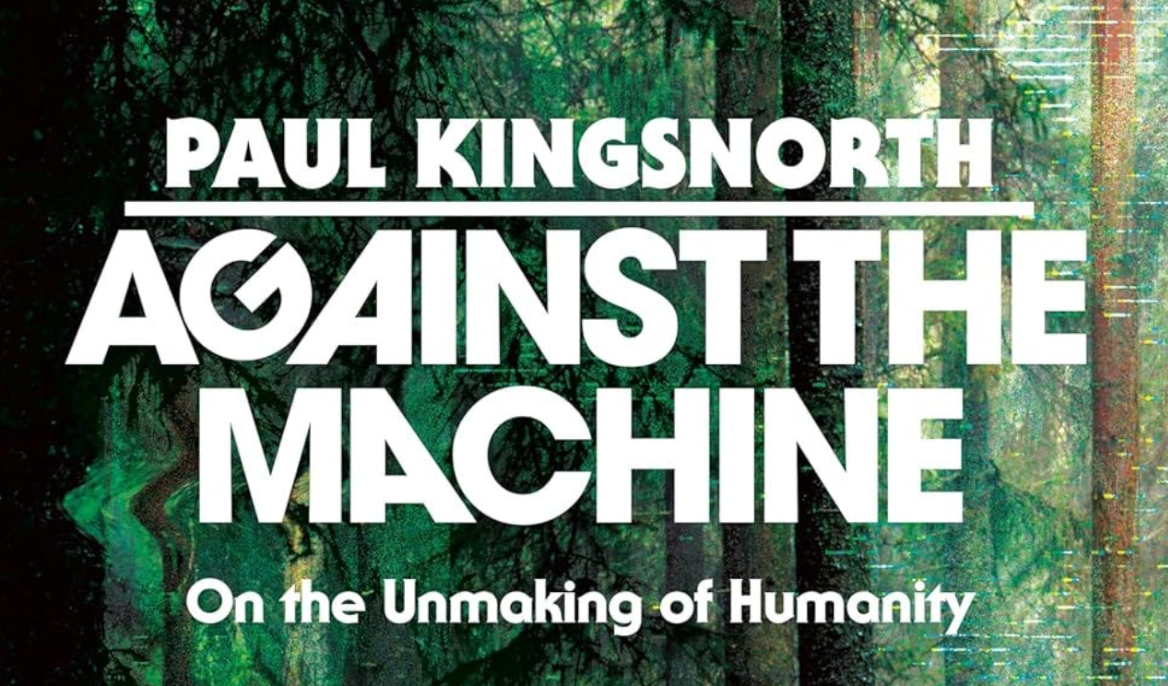
"God became man, so that man might become God." St. Athanasius the Great, On the Incarnation (54:3) These words from St. Athanasius may sound, at first blush, provocative. However, St. Athanasius is restating, perhaps more simply, what St. Peter says in his second epistle: the promise of being united to Christ is that men and women made in His image will partake in His divine nature (2 Peter 1:4). Paul Kingsnorth's latest book, Against the Machine, inverts this idea and opens our eyes to the world emerging at a rapid rate, the world dominated by what he calls The Machine. The new mantra of The Machine age is, instead, this: Man will become God by Man's own self-creation. Reading Kingsnorth is not for the faint of heart. It's easy to be overcome by despair. The goal of the Machine age is "transhumanism", to be liberated from the constraints of the body. For the transhumanist (self-described), the future is disembodied. The future is limitless. But this is not liberation. Because the Machine is not limited to the physical world, it follows naturally there is a spiritual nature to this lifestyle, what he ultimately identifies as a manisfestation and/or manipulation of the demonic. Whether or not you agree with his ultimate conclusion, we can see its effects. An entire generation, and many across generations, addicted to screens. Disintegration of communal life, most disastrously in the breakdown of the family. Increasing rates of loneliness, depression, and suicide, especially among children. It's clear we need a Savior, and the Machine isn't it. Instead, Kingsnorth encourages us toward a revival of community, men, women, and children living embodied lives in the same space and time: working together, eating together, worshipping together, loving each other, carrying each other's burdens. If this sounds like Eighth Day Institute...if this sounds like what the Church is meant to be, it is because this is exactly what the Church is. We are saved together in Christ. MICHAEL SIMMON currently serves as the Secretary of Eighth Day Institute Board of Directors and Coordinator for Hall of Men. He resides in Wichita, Kansas with his wife and four children.
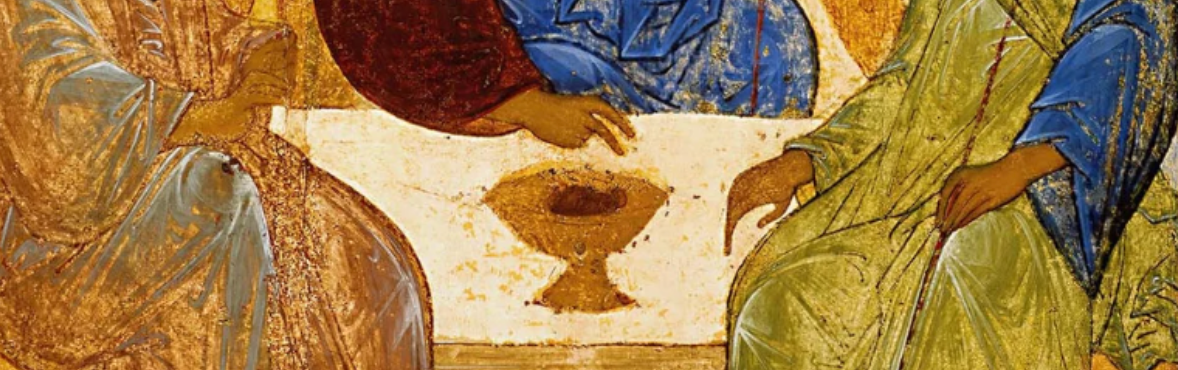
"What is it that has ordered the things of heaven and those of earth, the things which move through the air and those which move in the water; nay, rather the things which proceeded them: heaven and earth and the natures of fire and water? What is it that combined and arranged them...set them into motion and put them on their unceasing and unhindered course?..But who is the architect of these things? Or did not he who made them also bring them into being? We shall certainly not attribute such power to spontaneity." On the Orthodox Faith, Chapter 3 This comes after St. John of Damascus sets out to delineate between the created and the uncreated, a fact which, while at the core of existence, seems for him to be, for this very reason, the simplest to believe. Everything but God is created and, thus, susceptible to change. This means people, but this also means demons, angels, the rest of the created order across the entire cosmos. Everything is vulnerable to unrest. Except for God. If you have ever tried to explain the Holy Trinity to a child for the first time, maybe you have felt as I have the weightier, inexpressible side of God's unchangeability: how do I possibly communicate this essential fact to the person in front of me? (This is usually when my faint stutter starts to pop up again.) I like that here, like St. Patrick reaching for a three-leaf clover, St. John brings us back to earth to better understand the cosmos. Fire and water are no less mysteries than heaven and earth. And yet here we are, cooking and washing, eating and drinking, filled and sustained on what we can neither fully explain nor claim to have created. Only God is unchanging. Vice versa, God is the only constant we need. Maybe the rest is better left unsaid. LUKE TAYLOR GILSTRAP is Vice President of the Board of Directors for Eighth Day Institute. His poems have appeared in Spiritus, Ekstasis (Christianity Today), and Relief Journal, among others. He lives happily in Wichita, Kansas with his wife and three sons.

"Now, one who would speak or hear about God should know beyond any doubt that in what concerns theology and the Incarnation not all things are inexpressible and not all are capable of expression, and neither are all things unknowable nor are they all knowable. That which can be known is one thing, whereas that which can be said is another, just as it is one thing to speak and another to know. Furthermore, many of those things about God which are not clearly perceived cannot be fittingly described, so that we are obliged to express in human terms things which transcend the human order. Thus, for example, in speaking about God we attribute to Him sleep, anger, indifference, hands and feet, and the like." On the Orthodox Faith, Chapter 2 When I was studying Fiction in graduate school, one of the first methods I learned to really situate the reader in the story you were about to tell them was disorientation; if you wanted to ground them in one story, first you had pull the rug out from under their feet. So it's fitting that in the beginning of St. John Damascene's On the Orthodox Faith, before rebuilding our foundation, he first puts us squarely in limbo, seesawing back and forth between certainty and uncertainty. To paraphrase, there is no doubt (certainty) that about God some things can be expressed...but not all things (uncertainty). Some things about God are truly knowable (certainty), but some are unknowable (uncertainty). Oh, and while we're speaking about God (certainty), let's admit there's a gap, too, between what we say and what we know (uncertainty). My favorite line in this spiraling excerpt, "...it is one thing to speak, and another to know," takes me back to the final lines in Wendell Berry's poem, "How to Be a Poet," which he wrote primarily as a reminder to himself: Accept what comes from silence. Make the best you can of it. Of the little words that come out of the silence, like prayers prayed back to the one who prays, make a poem that does not disturb the silence from which it came. Wherever your preferences fall on the cataphatic or apophatic spectrum of theology (whether you lean more toward what we can say about God or what we cannot), Berry's poem, I think, would nod along with St. John: before we say too much, let our words be preserved by the silence from which they came. I'm thinking of the silence, that filling, restorative quiet I feel when I step into a cathedral or in some of my favorite moments with my kids in the early hours. Even before praying, can we hear the One already praying in us? Let's start there. LUKE TAYLOR GILSTRAP is Vice President of the Board of Directors for Eighth Day Institute. His poems have appeared in Spiritus, Ekstasis (Christianity Today), and Relief Journal, among others. He lives happily in Wichita, Kansas with his wife and three sons.
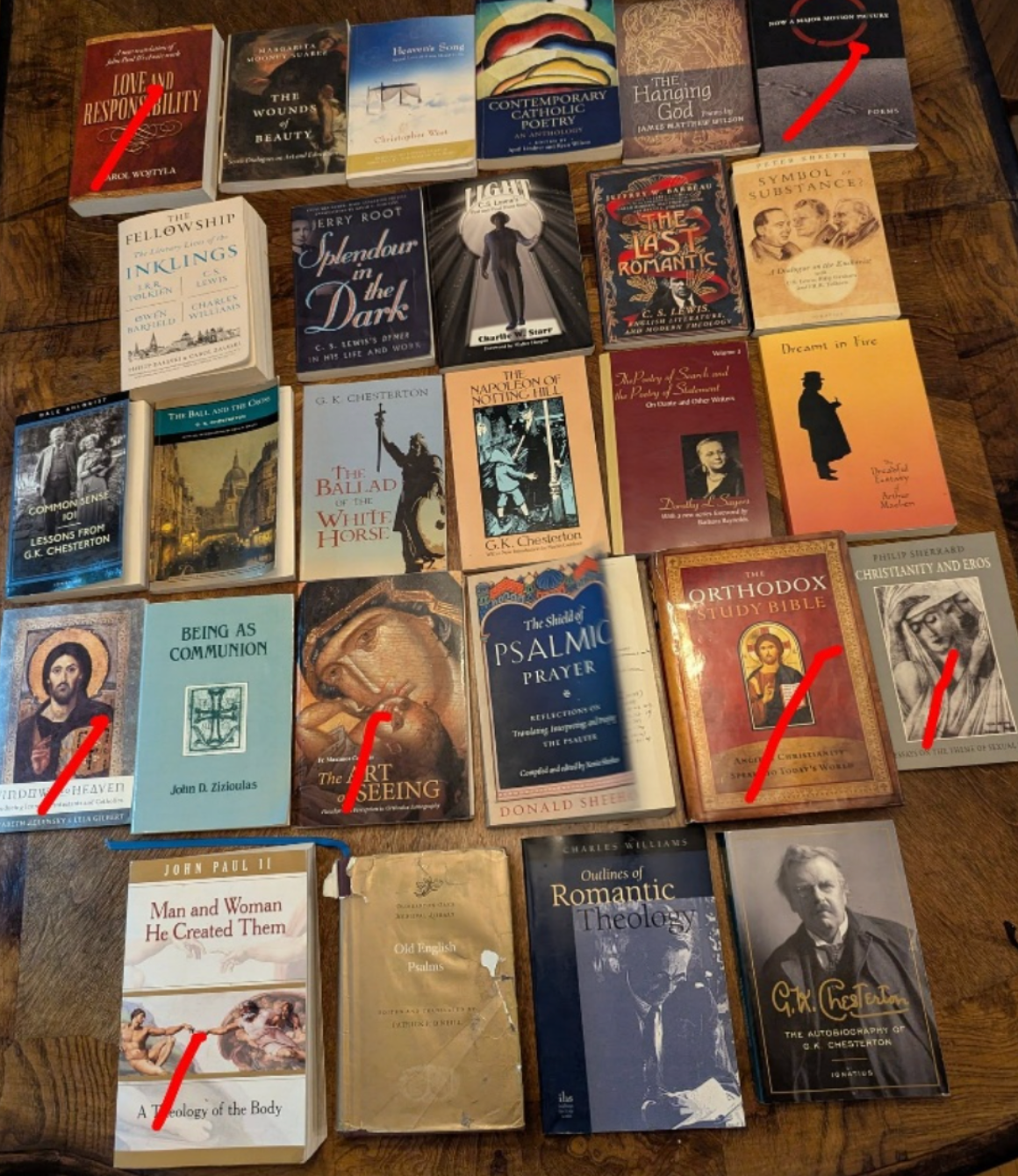
Late-Night Bookstores and Spiritual Reading
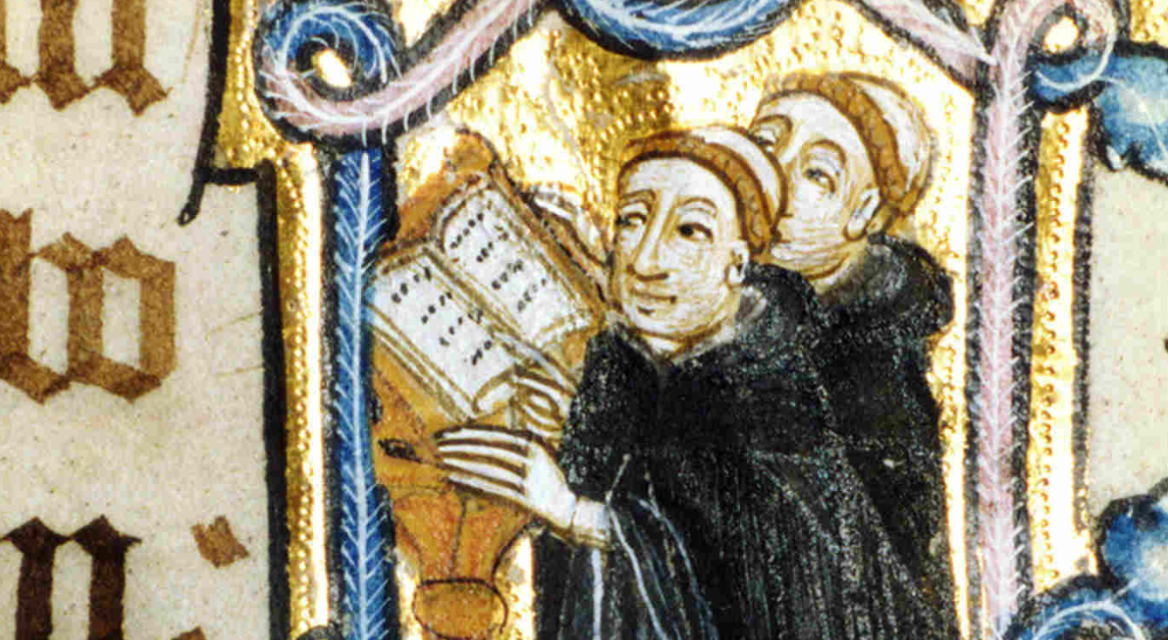
On St. Benedict and the Making of Vows

The Pursuit of Truth in the Age of AI

On the Theology of Raising Chickens

G.K. Chesterton and Raising Small Children
"Seal of the Fathers"