Letter to Simeon Yanovsky
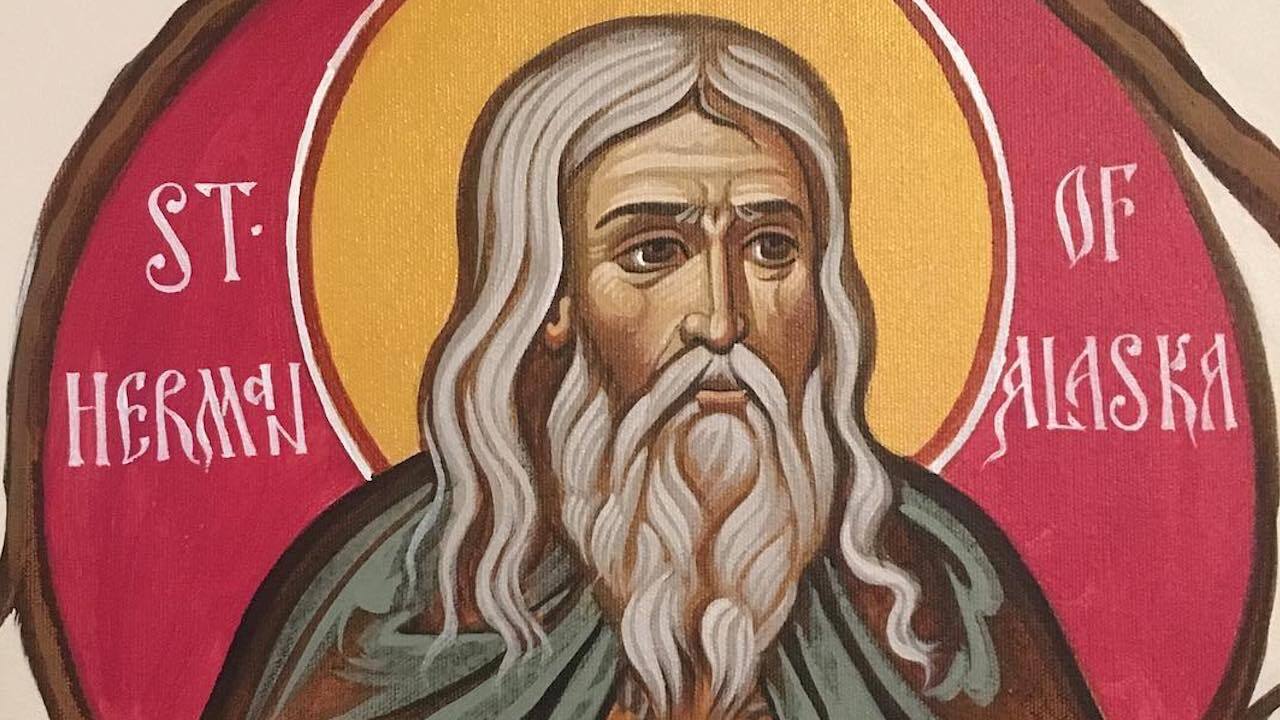
by St Herman of Alaska
Feast of St John the Merciful, Patriarch of Alexandria
Anno Domini 2020, November 12
Your honor
Gracious Sir
Simeon Ivanovich
I have had the honor to receive your kind, pleasant and gracious letter containing its interesting news, and the packet with it. I offer my heartfelt gratitude; I have nothing else with which to recompense you. I thank Almighty God for preserving your health and protecting you from all misadventure on land and on the sea, but even more for having in his incalculable ways shown you the true path by following which we may all achieve eternal joy, and by thus fulfilling the duty of our existence we shall fulfill the will of our Creator, who brought us into life for this sole purpose.
I had already been assured of your good disposition towards my humble self even before I met you personally. I hope to retain this affection in the future. Indeed out of your meekness and not disdaining my unworthiness you have shown more and more of your man-loving kindness towards my lowliness so I also become more daring before you hoping that you will not only not be angry at my simplicity and crudeness, but that you will most graciously pardon me. Without exalting myself to the rank of teacher, nonetheless, fulfilling my duty and obligation as an obedient servant for the benefit of my neighbor, I will speak my mind, founded on the commandments of Holy Scripture, to those who thirst and seek for their eternal heavenly homeland.
A true Christian is made by faith and love toward Christ. Our sins do not in the least hinder our Christianity, according to the word of the Savior Himself. He deigned to say: not the righteous have I come to call, but sinners to salvation; there is more joy in heaven over one who repents than over ninety righteous ones. Likewise concerning the sinful woman who touched His feet, He deigned to say to the Pharisee Simon: to one who has love, a great debt is forgiven, but from one who has no love, even a small debt will be demanded. From these judgments a Christian should bring himself to hope and joy, and not in the least accept an inflicted despair. Here one needs the shield of faith.
Sin, to one who loves God, is nothing other than an arrow from the enemy in battle. The true Christian is a warrior fighting his way through the regiments of the unseen enemy to his heavenly homeland. According to the word of the Apostle, our homeland is in heaven; and about the warrior he says: our warfare is not against flesh and blood, but against principalities and powers, against the rulers of the darkness of this age, against the spirits of wickedness under heaven (Eph. 6:12).
The vain desires of this world separate us from our homeland; love of them and habit clothe our soul as if in a hideous garment. This is called by the Apostles the outward man. We, traveling on the journey of this life and calling on God to help us, ought to be divesting ourselves of this hideous garment and clothing ourselves in new desires, in a new love of the age to come, and thereby to receive knowledge of how near or how far we are from our heavenly homeland. But it is not possible to do this quickly; rather one must follow the example of sick people, who, wishing the desired health, do not leave off seeking means to cure themselves. I am not speaking very clearly for I am hurrying, for time does not otherwise permit. But I hope that you, with your sharpness of intellect, and your ardent desire of striving toward the heavenly homeland, may discover the path to Holy Truth, not only for yourself but for others also.
Now I shall talk about matters of another kind.
When you left Kodiak, either through God’s wrath or His holy workings for our good, the epidemic continued for a while. It caused the death of many of the young women and left their children orphans. Amongst the dead were the godmother of Leonty Andreanovich and Anna Alexandrovna, the wife of Christopher the employee at the Church, but it did not touch my late daughter’s five young children. To the glory of the holy mystery of God He has recently, through His unfathomable Providence, shown me something which in all my twenty-five years here on Kodiak I had never seen before. Just after last Pascha a young woman of no more than twenty who spoke good Russian and who was previously unknown to me and whom I had never seen, came to me and heard about how the Son of God was made flesh, and about eternal life and she was so filled with love for Jesus Christ that she would not leave me, but she pleaded with me with great conviction, against my inclination and my love of solitude and in spite of all the obstacles and difficulties I mentioned, to accept her, and she has been living here now for more than a month and is not bored. I have observed this with great amazement, recalling the words of the Savior that what is hidden from the wise and prudent is revealed to babes. Seeing her, other women are desirous to do the same. But the trouble is that I have not the strength to build a separate dwelling for them. There are also many male aspirants who would like to come but there is no room for them.
Jeremiah who lives on Katmai came to see me with his children, and with a toyon [native village chief] who apparently had made a complaint against Jeremiah to Epiphanov. But this toyon, who had previously been an interpreter with the Russians, told me himself that the complaint had been wrongly made in anger to Epiphanov about Jeremiah by the present toyon, and Jeremiah himself told me that, concerning the sea otters, he had given Ershov 680 pelts, and Ershov had given Epiphanov 300, and that he had for a great many years been a faithful servant to various baidarshchikiks [a leader in native sea-mammal hunts], for which he had received a medal from Alexander Andreevich [Baranov], and that there were now surplus otters against the company goods, and only Ershov was short, and where could he have put so many—it all seemed an obvious lie.
Please be so kind as to dispatch my letter to Valaam whenever you are able.
Farewell, farewell, our kind benefactor, time does not allow me to write more. Forgive my poor writing, even it is carried out in conditions of great hardship, for my eyes almost refuse to serve me. Forgive me also that in return for your kindness and blessing I can pay nothing but gratitude from myself and my companion Ioasaph. We accept your gracious kindness not only with feeling but with surprise. It is with wholehearted gratitude that I remain
Thanking your Honor
Your obedient Servant
Lowly Herman
I offer my respects to your noble and kind lady, Anna Alexandrovna, and your dear little son Alexander Simeonovich
Lowly Herman
I also assure Kyril Timofeevich [Khlebnikov] of my respect
June 20th
1820
New Valaam
*Originally published in The Orthodox Word, No. 131 (1986), pp. 286-288.
Share this Post on Your Preferred Platform