Some Books to Read
by Dorothy Sayers
Feast of St Leontus the Martyr
Anno Domini 2023, August 17
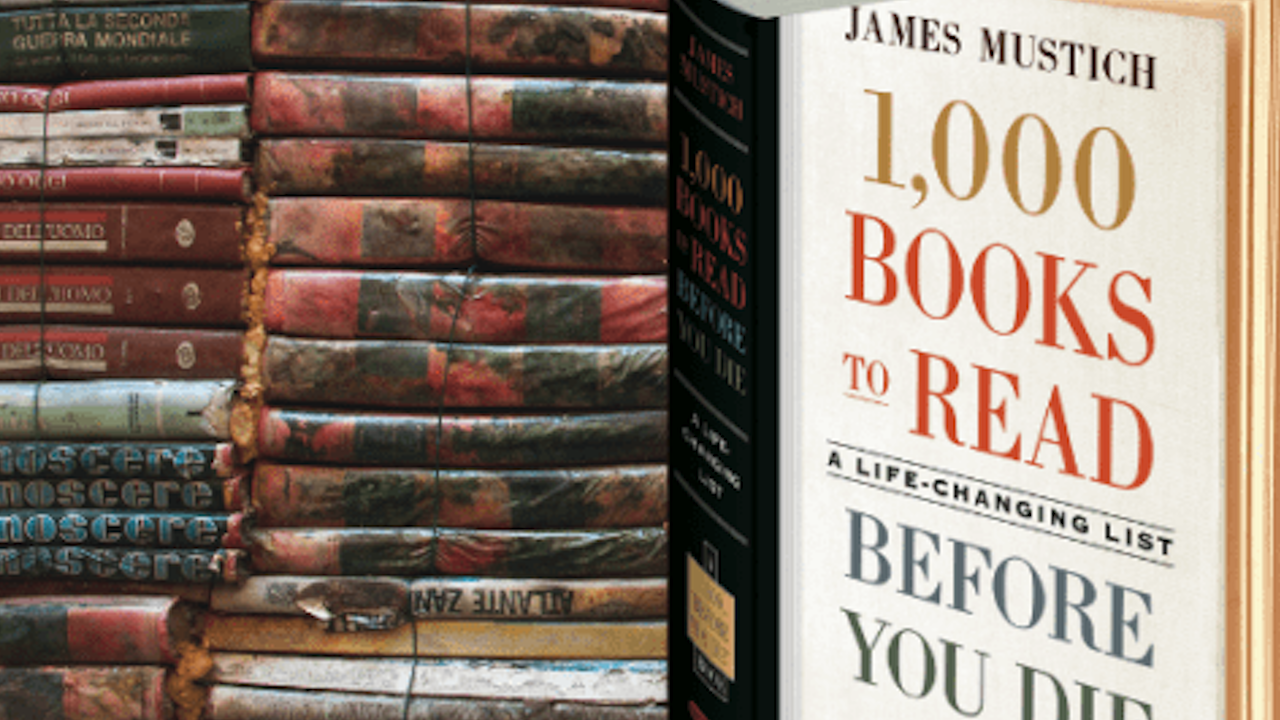
Here are a few suggestions for “black-out” reading. They are all books by modern writers, that illuminate some of the questions we have been discussing. A number of them you have probably read; this is just in case you have missed them:
1. Four books about the disintegrated state of mind the world has got into:
John Macmurray: Freedom in the Modern World
This is a series of broadcast talks given a few years ago, and, though written by a philosopher, is quite easy reading. The great point Professor Macmurray makes is that the chief part of our present trouble is caused by fear—the fear of life, and fear of one another.
Peter Drucker: The End of Economic Man
A rather difficult book, that needs and deserves to be read attentively—turn off the Wireless Announcer before getting down to it—but it is the most interesting and original book I have read recently. It deals with the failure of the economic state to provide man with a satisfactory and reasonable world to live in. Incidentally, it offers a really intelligible explanation of that very puzzling thing, the working of totalitarian economics.
J. B. Priestley: Rain upon Godshill
Mainly autobiographical; the passage that is important for our purpose is the long Chapter XIII. In a very stimulating way, Mr. Priestley hauls this country over the coals for its failure to carry out the principles of democracy in its institutions, and for the lack of creative purpose shown by the nation and by individuals.
L. P. Jacks: The Art of Living Together
Originally published under the title “Constructive Citizenship.” The chapters on Skill, Labour, and Leisure should be written in letters of gold on the tables of the heart.
2. Four books about Germany:
Stephen H. Roberts: The House that Hitler Built
This tells in considerable detail about Hitler’s rise to power and the organization of the Nazi state. It is interesting to read this and the next two books in conjunction with Drucker.
Hermann Rauschning: Germany’s Revolution of Destruction
The story of Nazi Germany from the inside. The author was Hitler’s “right-hand man” in Danzig until the Nazi regime reached a point beyond which he could not tolerate it, and he had to quit the country. It is a long book, rather diffusely written, but full of interest, and gives a terrifying picture of the purposeless “marching for marching’s sake” of the over-organized Nazi nation.
G. R. Halkett: The Dear Monster
Another book written from the inside (in spite of his English-sounding name, the writer is a South German by birth), but easier to read and more personal than the last. Halkett gives a very clear picture of the dreadful disintegration of mind and purpose in the Germany of the Weimar Republic, and shows how Hitler was able to take advantage of this to establish his “revolt into authority.”
Erica Mann: School for Barbarians
A documented account, very simply and readably written, of what it actually means, especially for women and children to live under a totalitarian regime. It shows how the “absolutism” of the state breaks up all family life, and how the whole of education is directed to war aims. The author is the daughter of Thomas Mann, the distinguished German novelist, who was driven into exile.
3. Two books which illustrate the difficulties of international understanding:
Bernard Newman: Danger Spots of Europe
An excellent survey of the incredible complications of those territorial questions which look so easy when we view them from an armchair, or imagine they can be settled by “head-counting” and plebiscites. Written by a novelist for the ordinary reader, without technicalities or statistical tables, from observations made on the spot.
A. L. Mackenzie: Propaganda Boom
This book, written in a popular style, shows how the propaganda racket is worked by the totalitarian states; how powerful its influence has been; and how important it is that the democracies should not neglect this “fourth arm” of war.
4. A book about the Empire:
Sir Arthur Willert, B. K. Long and H. V. Hodson: The Empire in the World
Rather a book for reference than for fireside reading; but if you want to realize just how lightly (as regards legal ties) the British Empire is held together, here are the facts.
5. Two books about Science:
A. N. Whitehead: Science and the Modern World
The philosophy of science, by a scientist. This is really stiff reading and no mistake, but is well worth the effort. (It is done in a “Pelican,” so you might risk sixpence on having a good go at it.) A passage of particular interest to us is that in Chapter I which stresses the dependence of scientific method upon that primary act of faith which assumes the universe to be fundamentally rational.
John Macmurray: The Boundaries of Science
The philosophy of science, by a philosopher, showing just why science can never deal with ultimate purpose but only with method, and how, with the examination into psychology, it has reached the limits of the field open to its survey. Rather harder reading than “Freedom in the Modern World,” but not requiring technical knowledge, only resolute thinking.
6. Five books about the Christian view of things:
Essays edited by V. A. Demant: Faith That Illuminates
Do not be put off by the title, which suggests something pious and devotional. This is a very practical collection of essays by both clerical and lay writers, dealing with various problems of today. Read particularly, “Religion and Leisure” by P. E. T. Widdrington, “Religion and Economics” by William G. Peck, and “Religion and Politics” by Maurice Reckitt.
V. A. Demant: The Religious Prospect
Written by the editor of the above. Rather tough going here and there, especially Chapter 5, but an extremely fine statement of the need for an “eternal absolute” and the disastrous results of investing any temporal principle with “total” authority.
Charles Williams: He Came Down from Heaven
A brilliant and exciting little book—though not for those who confuse the mystical with the obscure. I have added it to this list for its beautiful and imaginative treatment of the problem of the “knowledge of good and evil,” and the resolution of evil into good.
Christopher Dawson: Beyond Politics
The above books are by Anglican writers; this is by a member of the Roman Communion. It defines with great clarity the Christian view of the right relations between Church and State, and the relation of History to the standards of Eternity.
A. D. Lindsay: Pacifism as a Principle and Pacifism as a Dogma
This pamphlet by the Master of Balliol clears up many difficulties for the man who instinctively distrusts the doctrine of “total peace,” but does not see how to reconcile war with Christian principles.
*Dorothy Sayers, Begin Here: A War-Time Essay (London: Victor Gollancz Ltd, 1940), pp. 157-160.
**Be sure to register for the 2023 Inklings Festival which will focus on Dorothy Sayers.
Share this Post on Your Preferred Platform