Tolkien the Realist: Against the Ethics of Romanticism and the Tyranny of Relativism

by Malcolm Harris


Feast of St Eusebius, Bishop of Samosata

Anno Domini 2015, June 22
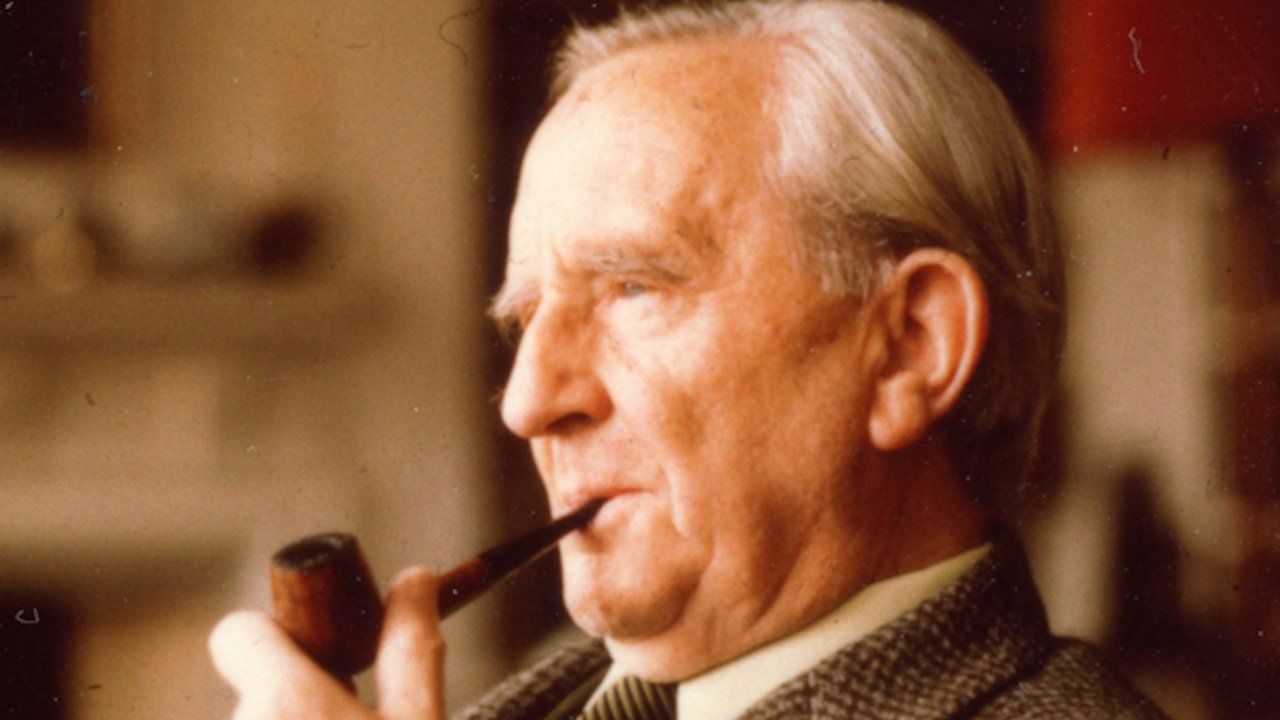


IN A RECENT interview in The Bookmonger by John J. Miller of the National Review, Carol Zeleski describes the Inklings as “the last of the Romantics.” In the case of J. R. R. Tolkien, I could not disagree more. 


Whereas Lewis acknowledges in Surprised by Joy that he was deeply influenced by neo-Platonism, Tolkien absorbed, as by osmosis, the Thomistic realism that hung in the very air of the Birmingham Oratory (founded by John Henry Cardinal Newman). Here Tolkien gained his early religious instruction. Here too, he and his brother Hillary served as altar boys. Both were raised there after his mother’s death. Mabel Tolkien, who died when Tolkien was eleven, appointed Father Morgan from the Oratory as the boys’ legal guardian. The Oratory was his philosophical and spiritual home.


When Pius XII, in his 1950 Humani Generis, declared Thomism the Church’s official philosophy, it was less an imposition than an acknowledgment of the status quo. The catechisms of that day and the preaching (think of Fulton Sheen) reflected how deeply ingrained Thomism was in the intellectual formation of the pre-Vatican II Church.


Romanticism does not come easily to someone formed in philosophical realism.'


Tolkien’s fiction certainly constitutes a work of great imagination. But that does not make his work Romantic. All fiction is created from the imagination, including the greatest works of the Realists. Tolkien does not move us by heaping up emotive words or florid imagery. He lets the story itself move us. 


Reading The Lord of the Rings, the reader is struck by the vivid concreteness of his descriptions. My younger son told me he loved hearing me read The Lord of the Rings to him because he could always see clearly what was being described. 


Tolkien’s elves and orcs mislead us. They make us think Middle Earth is very different from our own world or, indeed, Tolkien’s own England. But “Middle-earth” is the very real Anglo-Saxon midden-erd. In 1956, Tolkien explained the term: “Middle-earth is not an imaginary world. The name is the modern form (appearing in the13th century and still in use) of midden-erd < middel-erd, an ancient name for the oikoumenē, the abiding place of Men, the objectively real world, in use specifically opposed to imaginary worlds (as Fairyland) or unseen worlds (as Heaven or Hell)” (Letters, p. 239). It is very much the Anglo-Saxon England of Bede and Alfred. 


In Book II of The Lord of the Rings, Aragorn, Gandalf, Leogolas, and Gimli approach Théoden’s hall, Meduseld, in Edoras, Rohan’s capital. The warden challenges them and the whole scene takes the reader back to Beowulf, when the rider challenges Beowulf and his men. The horse-riding warden must gauge the mettle and intent of these warriors before they can be admitted to the king’s hall. 


We miss how Anglo-Saxon the Rohirrim are because at Hastings the Anglo-Saxons were foot soldiers not horsemen. This misreads the history. Anglo-Saxon Harold was completely surprised by William’s reckless gamble at crossing the Channel during that stormy season. At Stamford Bridge, Harold had just won a great victory over Viking Harald Hardrada. How? By covering 165 miles in four days by horse! Then, despite having to traverse back across all England (by horse) to meet William, Harold forced the battle in Hastings where his shieldwall held the advantage of higher ground and William had to attack uphill, pinched between two swamps in a swale. Harold should have won. Why did the Normans win? Not because they were on horse against the English on foot, but because a lucky arrow caught Harold in the eye. With their leader out of action, the Anglo-Saxons broke their shieldwall one time too many. 


But what has realism to do with ethics? Philosophical realism posits a real world that objectively exists. Moreover, man has a nature that can be discerned through reason. In simplest terms, there is such a thing as truth, including moral truth. This implies there is an objective right and wrong, a good and evil. Sound like The Lord of the Rings?


Contrast this with the Romantic point of view, which is best expressed by the line in the Broadway show, “Man of La Mancha” (by Mitch Leigh, Joe Darion, Dale Wasserman): “Facts are the enemy of truth!” Reality becomes what I feel. From this, it is a small step to the identity politics and the ethics of “If it feels good, it’s OK.” This seemingly benign approach to ethics descends rapidly to what Joseph Ratzinger described as “The Tyranny of Relativism.” We are witnessing the increasingly aggressive censorship of those who hold to objective moral truth by those whose subjective morality will tolerate no disagreement with their own self-satisfaction. Which side would Sauron choose? 


Malcolm C. Harris, Sr. is a retired Professor of Finance at Friends University. He has presented J. R. R. Tolkien and G. K. Chesterton, along with several other heroes, at the Hall of Men, a bimonthly event organized by Eighth Day Institute. He also organizes a Readers of First Things discussion group at Eighth Day Books.

Share this Post on Your Preferred Platform
By Luke Taylor Gilstrap July 31, 2026
"What is it that has ordered the things of heaven and those of earth, the things which move through the air and those which move in the water; nay, rather the things which proceeded them: heaven and earth and the natures of fire and water? What is it that combined and arranged them...set them into motion and put them on their unceasing and unhindered course?..But who is the architect of these things? Or did not he who made them also bring them into being? We shall certainly not attribute such power to spontaneity." On the Orthodox Faith, Chapter 3 This comes after St. John of Damascus sets out to delineate between the created and the uncreated, a fact which, while at the core of existence, seems for him to be, for this very reason, the simplest to believe. Everything but God is created and, thus, susceptible to change. This means people, but this also means demons, angels, the rest of the created order across the entire cosmos. Everything is vulnerable to unrest. Except for God. If you have ever tried to explain the Holy Trinity to a child for the first time, maybe you have felt as I have the weightier, inexpressible side of God's unchangeability: how do I possibly communicate this essential fact to the person in front of me? (This is usually when my faint stutter starts to pop up again.) I like that here, like St. Patrick reaching for a three-leaf clover, St. John brings us back to earth to better understand the cosmos. Fire and water are no less mysteries than heaven and earth. And yet here we are, cooking and washing, eating and drinking, filled and sustained on what we can neither fully explain nor claim to have created. Only God is unchanging. Vice versa, God is the only constant we need. Maybe the rest is better left unsaid. LUKE TAYLOR GILSTRAP is Vice President of the Board of Directors for Eighth Day Institute. His poems have appeared in Spiritus, Ekstasis (Christianity Today), and Relief Journal, among others. He lives happily in Wichita, Kansas with his wife and three sons.
By Luke Taylor Gilstrap July 24, 2026
"Now, one who would speak or hear about God should know beyond any doubt that in what concerns theology and the Incarnation not all things are inexpressible and not all are capable of expression, and neither are all things unknowable nor are they all knowable. That which can be known is one thing, whereas that which can be said is another, just as it is one thing to speak and another to know. Furthermore, many of those things about God which are not clearly perceived cannot be fittingly described, so that we are obliged to express in human terms things which transcend the human order. Thus, for example, in speaking about God we attribute to Him sleep, anger, indifference, hands and feet, and the like." On the Orthodox Faith, Chapter 2 When I was studying Fiction in graduate school, one of the first methods I learned to really situate the reader in the story you were about to tell them was disorientation; if you wanted to ground them in one story, first you had pull the rug out from under their feet. So it's fitting that in the beginning of St. John Damascene's On the Orthodox Faith, before rebuilding our foundation, he first puts us squarely in limbo, seesawing back and forth between certainty and uncertainty. To paraphrase, there is no doubt (certainty) that about God some things can be expressed...but not all things (uncertainty). Some things about God are truly knowable (certainty), but some are unknowable (uncertainty). Oh, and while we're speaking about God (certainty), let's admit there's a gap, too, between what we say and what we know (uncertainty). My favorite line in this spiraling excerpt, "...it is one thing to speak, and another to know," takes me back to the final lines in Wendell Berry's poem, "How to Be a Poet," which he wrote primarily as a reminder to himself: Accept what comes from silence. Make the best you can of it. Of the little words that come out of the silence, like prayers prayed back to the one who prays, make a poem that does not disturb the silence from which it came. Wherever your preferences fall on the cataphatic or apophatic spectrum of theology (whether you lean more toward what we can say about God or what we cannot), Berry's poem, I think, would nod along with St. John: before we say too much, let our words be preserved by the silence from which they came. I'm thinking of the silence, that filling, restorative quiet I feel when I step into a cathedral or in some of my favorite moments with my kids in the early hours. Even before praying, can we hear the One already praying in us? ​​​​​​​Let's start there. LUKE TAYLOR GILSTRAP is Vice President of the Board of Directors for Eighth Day Institute. His poems have appeared in Spiritus, Ekstasis (Christianity Today), and Relief Journal, among others. He lives happily in Wichita, Kansas with his wife and three sons.
By Mark C. Watney July 20, 2026
Late-Night Bookstores and Spiritual Reading
By Sarah Orner July 20, 2026
On St. Benedict and the Making of Vows
By Luke Taylor Gilstrap July 20, 2026
The Pursuit of Truth in the Age of AI
By Michael Simmon July 20, 2026
On the Theology of Raising Chickens
By Luke Taylor Gilstrap July 20, 2026
G.K. Chesterton and Raising Small Children
By Fr. Mark Lovett June 9, 2026
"Seal of the Fathers"
By Luke Taylor Gilstrap June 9, 2026
In Memory of Warren Farha, 1955-2026
By Jeremy Wagner May 15, 2026
An Ode to St. Brendan the Voyager
More Posts